Insulated garage doors are worth it for most homes because they lower energy bills, reduce noise, and make the garage a more comfortable and durable space year-round. That combination of performance gains is what makes proper garage door installation one of the highest-value upgrades a homeowner can choose.
The full value becomes clear when looking at how insulated garage doors perform in energy efficiency, durability, noise control, and long-term cost savings. This guide breaks down each factor so the decision to upgrade is backed by the right information from the very start.
What Does It Mean When a Garage Door Is Insulated
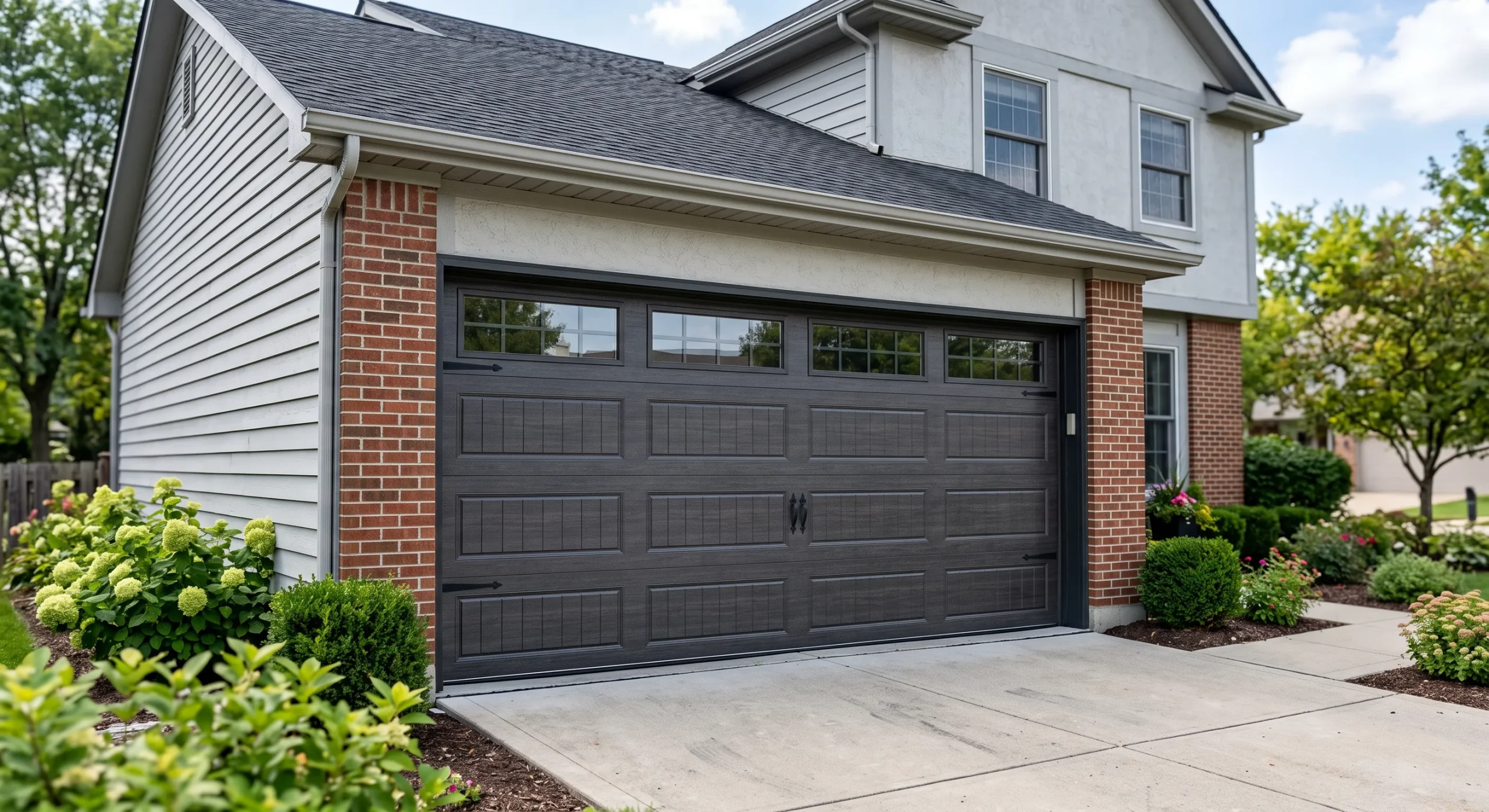
A garage door is considered insulated when one or more layers of insulation material are built directly into the panels to slow heat transfer between the garage interior and the outside world.
Common features of an insulated garage door include:
- Polyurethane foam or polystyrene fills the panels to create a thermal barrier
- Layered construction adds structural rigidity alongside insulation value
- Weather stripping and bottom seals block air leaks around the door frame
- R-value ratings measure how well the door resists heat transfer
- Steel doors with an insulated core hold up better in extreme temperatures
To understand how this difference in construction affects temperature regulation inside the garage, read our guide on How Insulated Garage Doors Regulate Indoor Temperature, which explains the mechanics behind consistent garage climate control.
What Sets Insulated Garage Doors Apart From Non-Insulated Ones
Insulated and non-insulated garage doors differ significantly in construction, performance, and long-term value.
Feature | Insulated | Non-Insulated |
Construction | Multi-layer with foam core | Single hollow panel |
Heat Transfer | Resists heat flow effectively | Allows heat to pass through freely |
Noise Reduction | Absorbs sound and vibration | Offers no sound dampening |
Durability | More rigid and dent-resistant | More prone to denting and warping |
Temperature Control | Maintains consistent indoor temperature | Allows extreme temperature swings |
Energy Impact | Reduces load on the HVAC system | Contributes to higher energy bills |
To compare how these differences play out in real performance and long-term value, read our guide on Are Insulated Garage Doors Better Than Non-Insulated Ones?, which covers how each option holds up across comfort, cost, and everyday use.
Benefits of an Insulated Garage Door That Make It Worth It
Improved Energy Efficiency
Insulated garage doors limit heat transfer through the panels, reducing the amount of work the HVAC system must do to maintain indoor comfort.
Key ways insulated garage doors improve energy efficiency:
- Slows heat gain in summer and heat loss in winter
- HVAC system cycles less during peak seasons
- Attached garages add less thermal stress to connected living spaces
- Higher R-value doors resist heat flow more effectively
- Energy costs drop steadily as insulation performs year after year
Reducing heat transfer at the garage door level is one of the most direct ways to improve a home’s overall energy efficiency.
Enhanced Daily Comfort
Garage spaces used for work, fitness, or hobbies need stable temperatures to stay functional throughout the day.
What insulated garage doors do for daily comfort:
- Blocks excess heat from building up inside the garage
- Attached garages stay manageable even during frigid winters
- Stored vehicles avoid repeated exposure to outside temperatures
- Workspaces and hobby areas maintain a more comfortable space year-round
- Indoor temperatures stay stable from morning through peak afternoon heat
Stable garage temperatures make a real difference for homeowners who treat the garage as a functional extension of the home.
Quieter Operation
Noise pollution from street traffic and the door’s own mechanical movement drops significantly with an insulated door.
How insulation contributes to quieter garage operation:
- Foam-filled panels absorb vibration during every open and close cycle
- Street traffic and lawn equipment sounds are dampened by the insulation core
- Noise transmission through shared walls drops noticeably
- Rattling and metallic sounds common in hollow doors are eliminated
- A quality garage door opener paired with an insulated door reduces overall mechanical noise significantly
Noise reduction is one of the most immediate benefits homeowners report after upgrading to an insulated garage door.
Increased Durability and Strength
Layered construction gives insulated garage doors a structural advantage that hollow panels cannot match.
Why insulated doors hold up better over time:
- Polyurethane insulation bonds with the steel shell for a rigid panel
- Dents and dings from everyday contact are far less likely
- Multi-layer panels resist wind pressure and physical impact better
- Shape and alignment hold longer than hollow door alternatives
- Fewer alignment issues and dents mean less frequent garage door repair over the door’s lifespan
Investing in a new garage door with built-in insulation technology pays off in structural performance well beyond what the R-value alone suggests.
Protection for Stored Items
Extreme temperatures affect everything stored inside a garage, from vehicles and tools to household supplies.
What consistent temperature control protects inside the garage:
- Paint, adhesives, and chemicals degrade faster without a thermal barrier
- Electronics and battery-powered tools avoid heat-related damage
- Vehicles experience less wear on seals and fluids
- High-value equipment near the door benefits most from added insulation
- Seasonal items and sensitive materials stay stable year-round
Routine garage door maintenance catches early wear in seals and weatherstripping before outside temperatures push through unprotected panels.
Better Resale Value
Curb appeal and energy performance are two factors buyers weigh heavily when evaluating a home.
How insulated garage doors contribute to home value:
- Refined panel designs and finishes improve curb appeal immediately
- Energy-conscious buyers see insulated doors as a sign of a well-maintained property
- Upgrades that reduce utility costs add measurable value for future owners
- Garage door replacement ranks among the highest ROI home improvement projects
- Insulation upgrades signal long-term property care to appraisers and buyers
Garage door upgrades with insulation consistently deliver strong returns for resale-focused homeowners.
Which Type of Insulated Garage Door Gives the Most Value
Understanding insulation types helps homeowners choose a door that delivers real performance for their garage’s climate and usage.
Type | Insulation Material | Best For | Performance Level |
Double-Layer | Polystyrene foam | Budget-conscious homeowners | Moderate |
Triple-Layer | Polyurethane foam | Full-time garage use | Highest |
Retrofit Kit | Polystyrene or reflective foil | Existing doors | Basic to moderate |
Reflective Foil | Foil with foam backer | Hot climates | High radiant heat resistance |
Steel Insulated | Injected polyurethane | Maximum durability and thermal performance | Premium |
Aligning the insulation type with the garage’s climate and daily use makes an insulated garage door a smart long-term investment.
Signs a Home Needs Insulated Garage Doors
A garage missing proper insulation tends to show warning signs that point directly toward an upgrade, and recognizing them early makes the decision much easier.
Common signs a home needs insulated garage doors:
- Rooms next to the garage feel noticeably warmer or colder than the rest of the home
- Energy bills spike during summer or winter without an obvious cause
- The garage is used as a workspace, gym, or hobby area that needs stable temperatures
- Condensation forms on the interior surface of the door during temperature shifts
- Street noise or mechanical rattling carries easily through the existing door
To learn more about the specific patterns homeowners notice before upgrading, read our guide on Signs a Home Needs Insulated Garage Doors, which covers the clearest indicators that an insulated garage door upgrade is needed.
How to Choose the Right Insulated Garage Door
The right insulated garage door depends on a few key factors that determine long-term performance and value.
What to look for when choosing an insulated garage door:
- Climate and garage usage determine which insulation type performs best
- A higher R-value delivers stronger resistance to heat transfer
- Polyurethane foam suits attached garages used year-round for living or work
- Polystyrene or a retrofit kit works well for budget-conscious upgrades
- Long-term energy savings should factor into the overall cost comparison
A door chosen with these factors in mind performs well for years and avoids the added cost of switching insulation types later on.
Why Proper Installation Makes Insulated Garage Doors Work Better
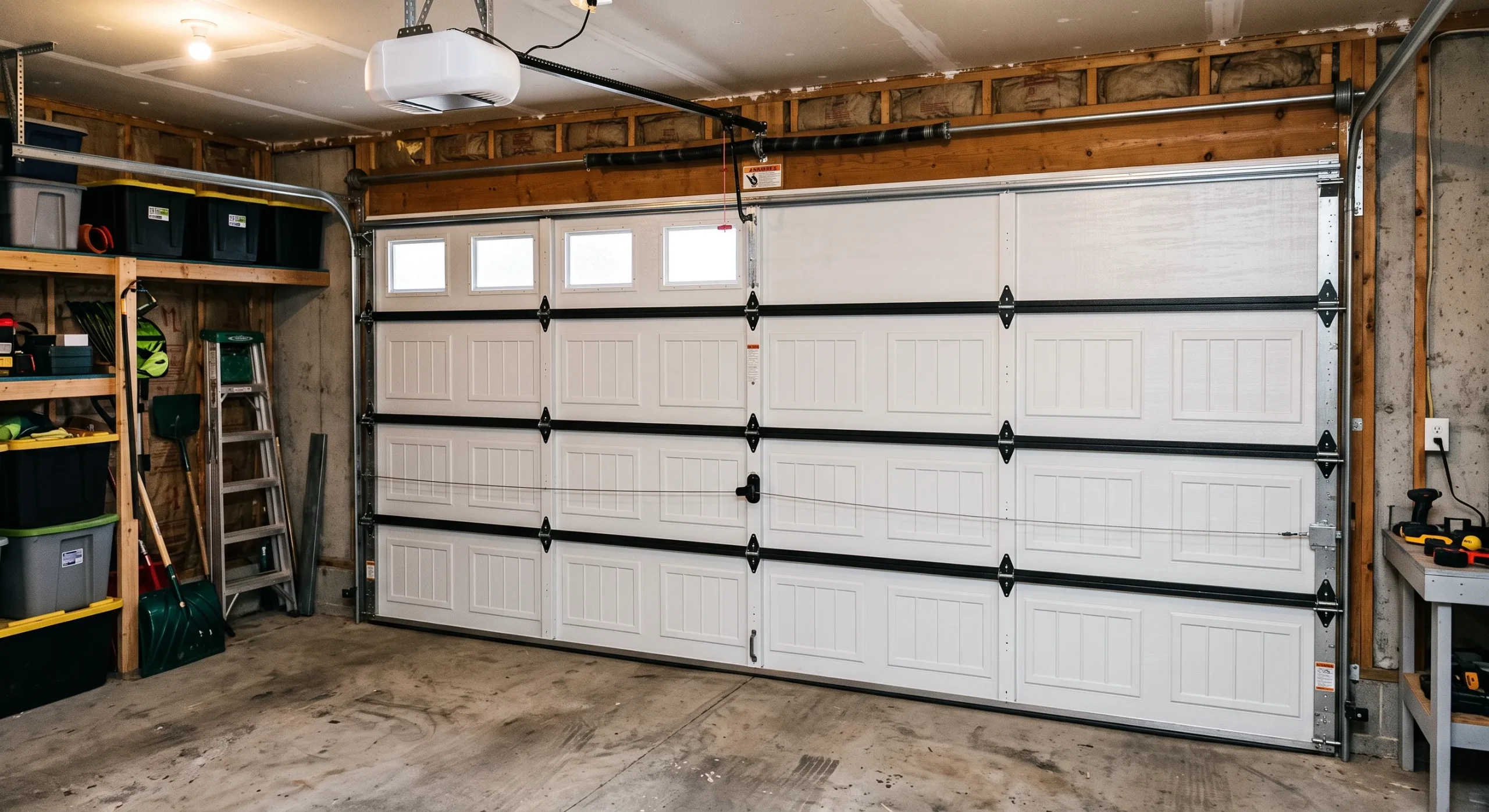
A correctly installed insulated garage door performs at its full rated value, while poor installation undermines even the best insulation materials.
What proper installation does for an insulated garage door:
- Tight seals around the frame prevent air leaks that weaken thermal performance
- Properly aligned panels keep the insulation layer intact and effective
- Balanced springs and hardware reduce stress on the insulated panels over time
- Correct fitting preserves the manufacturer’s rated R-value from day one
- A trained technician checks the frame, hardware, and seals before installation begins
Quality installation protects the door’s performance and keeps the insulation working as intended for years to come.
Insulated Garage Doors Are the Upgrade Worth Making Today
Insulated garage doors deliver lasting value through lower energy bills, quieter operation, added durability, and stronger resale appeal for nearly every home. These combined advantages make the investment worthwhile regardless of how the garage gets used from one season to the next.
Royale Garage Door Service guides homeowners throughout Mission Viejo toward the insulated door that fits their budget, climate, and daily needs, with options suited to every door style and usage pattern. Contact us or give us a call today to schedule a free consultation and find the right fit for the home.