A shaking garage door needs professional repair once the cause traces back to structural damage, worn hardware, or a component under mechanical tension, such as a bent track, a failing spring, or a frayed cable. These categories cover parts capable of injuring someone who attempts the repair without proper training or the right tools.
Confirming which of these specific causes applies to a given door is a job best left to a trained technician before any repair work actually begins. This guide walks through every warning sign in detail, along with what a full professional garage door repair visit typically involves from start to finish for most households.
Key Takeaways
- A bent or displaced track usually needs professional realignment tools
- Frayed cables and failing springs carry serious injury risk if handled directly
- Uneven door weight almost always points to a spring tension problem
- Grinding or screeching sounds often signal metal-on-metal contact inside the system
- A door moving at an angle needs prompt attention before it worsens
Warning Signs a Shaking Garage Door Needs a Professional
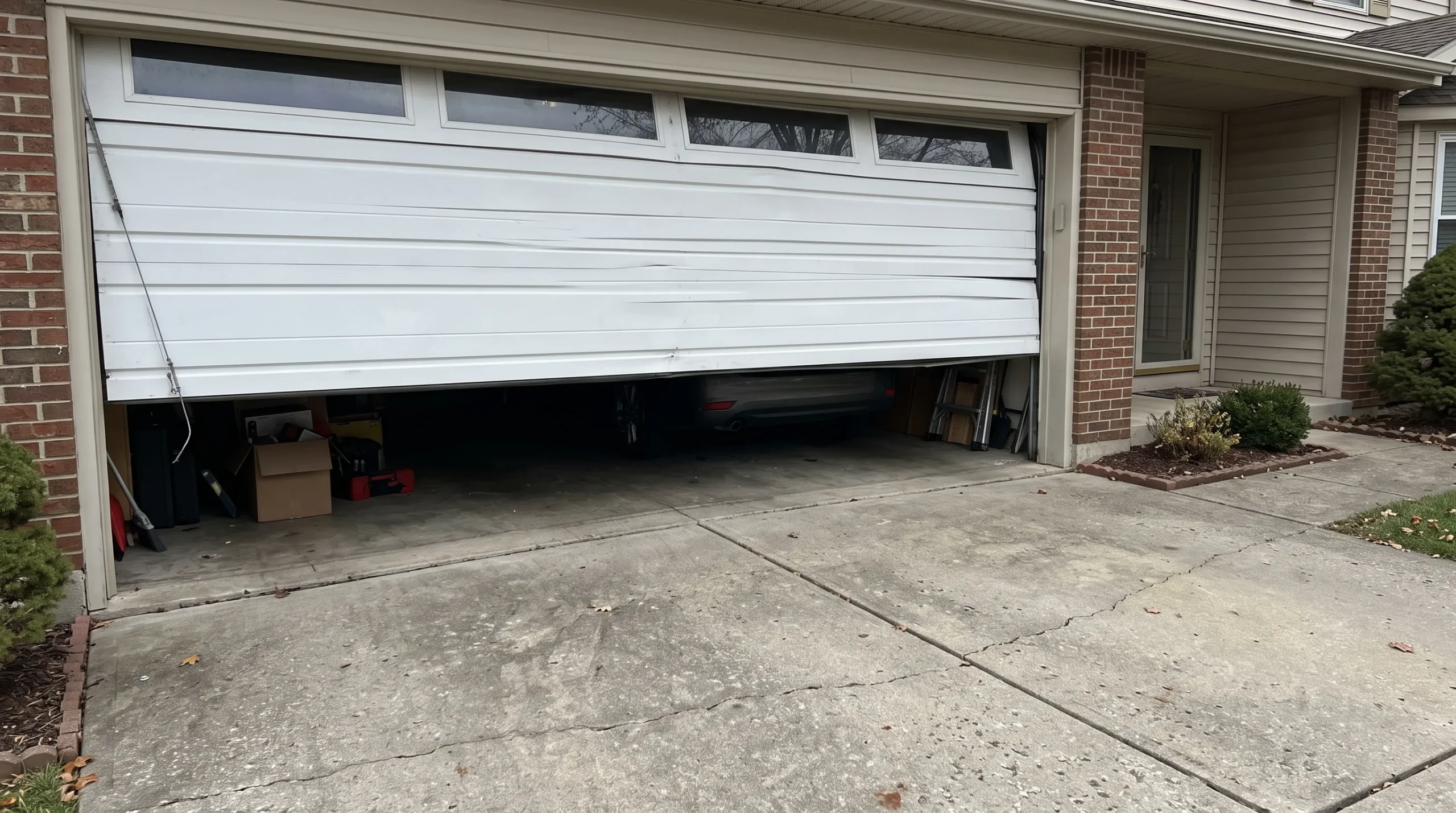
A homeowner can check the door against eight specific signs to determine whether the shaking has moved past a simple fix.
Warning Sign | What to Check For | Why It Needs a Professional |
Bent or displaced track | Gaps or curves visible along the rail | Requires realignment tools and precise measurement |
Cracked or stuck rollers | Flat spots or a wheel that will not spin | Safe to inspect, replacement often needs door support |
Loose panel hardware | Bolts that will not stay tight after retightening | Often a homeowner fix unless hardware keeps failing |
Frayed or snapped cable | Visible fraying or rust along the cable strands | Stores dangerous tension, snaps unpredictably |
Uneven door weight | One side lifting faster than the other by hand | Spring tension carries serious injury risk |
Loose opener belt | A visible gap between the belt and drive gear | Simple adjustment, but recurring issues need diagnosis |
Door moving at an angle | A visible tilt during the middle of the cycle | Often involves more than one system out of alignment |
Grinding or screeching sounds | Noise tied to a specific point in the cycle | Signals advanced wear needing full inspection |
Comparing the actual symptom against this table identifies the affected system before scheduling a technician visit.
Track Pulls Away From the Wall
A track pulling away from its mounting brackets throws the entire path of the door out of alignment, which no simple tightening fix can correct on its own.
A few details confirm this specific problem:
- Visible gaps between the track and the garage frame
- Bent sections that no longer run in a straight line
- Loose or missing lag bolts at the mounting points
- A door that jerks hard at the exact spot where the track has shifted
- Damage that appears worse after each cycle rather than staying the same
Realigning a pulled track calls for the right tools and experience to avoid causing further damage to the surrounding frame.
Rollers Stop Turning Smoothly
Rollers that seize up or drag instead of rolling freely put constant strain on the entire garage door system with every open and close cycle.
A close look usually reveals one of these specific issues:
- Flat spots worn into the roller surface from age or heavy use
- Roller wear severe enough to prevent the wheel from turning at all
- Cracked plastic or nylon rollers ready to fail completely
- Rust or corrosion seizing the roller axle in place
- A grinding sound coming specifically from the roller housing
A garage door roller repair & replacement service resolves this quickly once the rollers have reached this stage of wear.
Panel Hardware Works Itself Loose
Nuts, bolts, and hinges holding the door panels together loosen gradually with every cycle, and once enough of them go, the panels themselves start to shift.
These specific signs point to hardware past a simple tightening:
- Bolts that will not stay tight even after repeated adjustment
- Enlarged or stripped holes where hardware no longer grips
- Hinges with visible play or wobble at the pivot point
- Panels that flex or separate slightly during movement
- Missing hardware that has fallen out and not been replaced
To try tightening this hardware before assuming it needs replacement, read our guide on Easy Fixes for a Garage Door That Shakes When Closing, which covers the exact steps for this specific fix.
A Lifting Cable Frays or Snaps
Steel lifting cables carry serious tension while holding the weight of the door, and once a cable frays or snaps, that stored force becomes dangerous.
A few warning signs make this risk clear:
- Visible fraying along the exposed length of the cable
- Rust spots forming on individual cable strands
- A door that drops suddenly on one side during operation
- Uneven tension noticeable between the two cables
- A loud snapping sound followed by the door refusing to move
A garage door cable repair technician typically handles this kind of failure quickly, since a snapped cable needs replacement before the door can operate safely again.
The Door Weighs Unevenly on One Side
A door that feels heavier on one side almost always points to a spring imbalance, since torsion springs are designed to carry the weight of the door equally.
These specific signs confirm an imbalance:
- One side lifting faster than the other during manual operation
- The opener motor straining noticeably more than it used to
- A visible gap or unwinding in one torsion spring compared to the other
- The door refusing to stay level when disconnected from the opener
- A door that will not stay open partway without sliding back down
To understand exactly why spring imbalance causes this kind of shaking, read our guide on Why Does My Garage Door Shake When Closing?, which breaks down every possible cause in detail.
The Opener Belt Slips or Loosens
An opener belt or chain that slips instead of gripping the drive gear creates a jerky, inconsistent motion instead of one smooth operation.
A few specific signs point to this exact problem:
- A visible gap between the belt and the drive gear teeth
- Chain tension that has slackened well beyond its original setting
- A grinding or slapping sound during the middle of the cycle
- Opener problems that improve briefly after tightening, then return
- A belt showing visible cracking or wear along its surface
To build a maintenance routine that catches belt and chain wear before it worsens, read our guide on How to Prevent a Garage Door From Shaking When Closing, which lays out a full seasonal checklist.
The Door Moves at an Angle
A door traveling at an angle instead of straight down usually means one side of the system is under more resistance than the other.
These specific signs help confirm this pattern:
- A visible tilt during the middle portion of the cycle
- One side reaching the floor before the other consistently
- Uneven wear patterns visible on one track compared to the other
- Bent garage door tracks contributing unevenly to the resistance
- A door that appears to twist slightly during movement
Correcting proper alignment on a door moving this way often requires adjusting more than one system at the same time.
Grinding or Screeching Sounds Appear
Grinding, popping, or screeching sounds during operation usually mean metal is contacting metal somewhere inside the garage door track or opener housing.
A few specific causes commonly explain this sound:
- Dry rollers grinding directly against the metal track surface
- Worn ball bearings inside a roller no longer spinning smoothly
- Metal-on-metal contact from a bent or misaligned track section
- Opener motor strain producing a mechanical grinding noise
- Temperature swings making old, hardened lubricant grind rather than glide
Persistent grinding that continues even after basic lubrication usually points to a part already too worn to fix with routine garage door maintenance alone.
What to Expect During a Professional Repair Visit
Scheduling a professional repair visit starts with a full inspection of the door parts most likely tied to the reported symptom, followed by a specific plan to correct it.
A typical visit includes these steps:
- Testing the balance and travel of the door through several cycles
- Inspecting springs, cables, and pulleys for visible wear or damage
- Checking the opener motor and drive system for slippage or strain
- Confirming safety sensors function correctly before finishing the visit
- Explaining the exact cause of the issue and the recommended fix
Technicians typically wrap up a visit like this in a single appointment once the cause behind the symptom is confirmed.
A Shaking Garage Door Needs a Professional When These Signs Appear
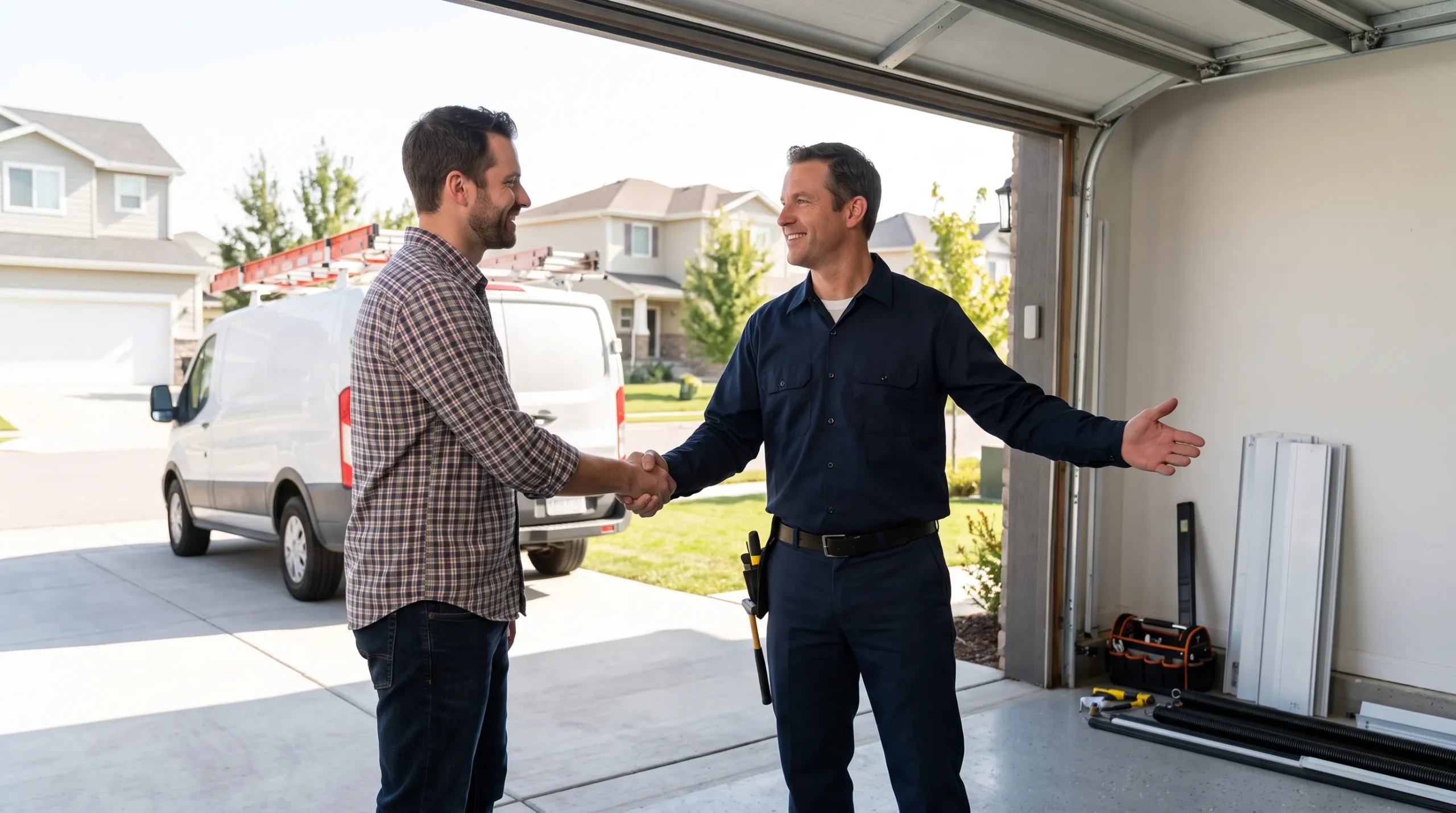
Spring imbalance, frayed cables, and a shifted track all mean a shaking garage door has moved well past a simple homeowner fix and into territory that needs trained hands and the right equipment. Recognizing these signs early on keeps a minor repair issue from creating a much larger safety concern overall.
Royale Garage Door Service inspects each of these specific warning signs closely for homeowners across Mission Viejo before recommending any actual repair work. Contact us or give us a call today, and our trained technicians will identify the exact cause behind the shaking on the very first visit.