A garage door that shakes when closing usually responds well to a few basic homeowner fixes, including tightening loose hardware, lubricating moving parts, and adjusting the tracks or opener settings. Most of these repairs take under an hour and require only common hand tools already found in most garages.
Scheduling a garage door repair visit makes sense if the shaking keeps returning after trying these steps at home, especially when the same spot in the cycle keeps acting up. This guide walks through each method in detail, along with the tools needed and the point where a professional becomes the better option.
Key Takeaways
- Loose hardware and dry rollers account for most minor shaking during closing
- Basic hand tools handle the majority of these fixes without professional help
- A misaligned track or worn roller often causes a shaky door at one specific point
- Spring-related shaking carries real safety risks and needs professional attention
- Fixing the garage door opener close limit setting solves shaking tied to opener problems specifically
Practical Ways to Stop a Garage Door From Shaking
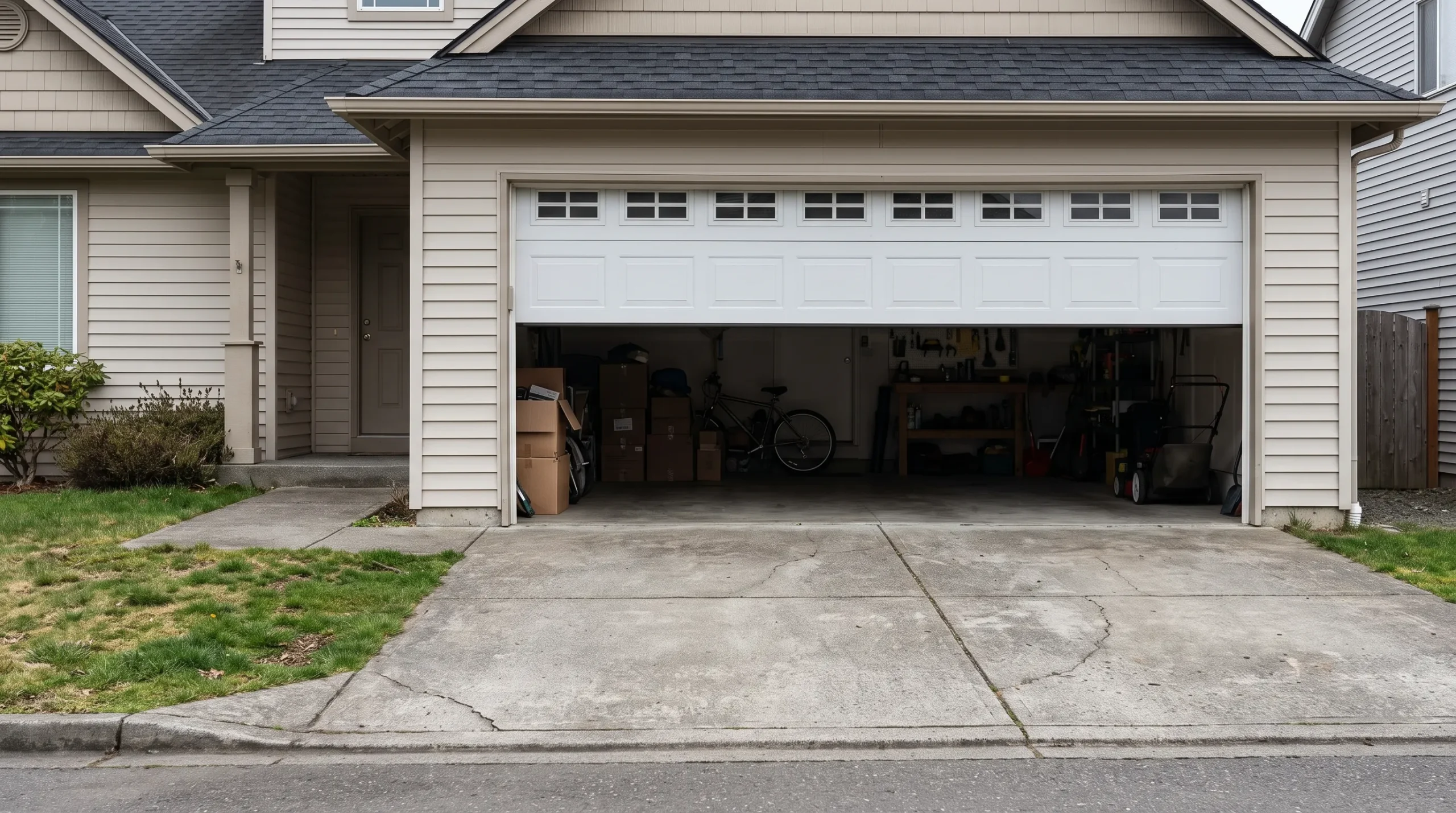
Six specific fixes address the most common causes behind a garage door shake, each one targeting a different part of the system directly.
Fix | Tools Needed | Time Required |
Tighten loose hardware | Wrench or socket set | Under 30 minutes |
Lubricate moving parts | Silicone or lithium lubricant | Under 30 minutes |
Align the tracks | Rubber mallet, level | 30 to 45 minutes |
Replace worn rollers | Pliers, replacement rollers | 45 to 60 minutes |
Inspect and adjust springs | Visual inspection only | 15 minutes, professional needed for repair |
Adjust close limits | Screwdriver | Under 15 minutes |
Choosing the right fix stops the shaking at its source, though a spring should only be inspected visually, with repair work left to a trained technician.
Tighten Loose Hardware
Loose bolts on the tracks, hinges, and mounting brackets rank among the most frequent causes of a shaky door, since constant vibration works hardware loose over time.
A few tools and steps make this fix quick:
- Using a wrench or socket set to reach bolts along the full length of the track
- Checking mounting brackets where the track connects to the garage frame
- Tightening hinge bolts between each of the door panels
- Confirming an appropriate level of tightness without overtightening and stripping the hardware
- Rechecking the same points again after a few open-close cycles
This straightforward fix often resolves shaking on its own, though hardware that keeps loosening on the same points points to a deeper issue worth a closer look.
Lubricate Moving Parts
A lack of lubrication on the rollers, springs, and hinges creates friction that shows up as shaking, and a proper lubricant resolves this quickly.
The right approach makes the difference between a lasting fix and a temporary one:
- Applying a silicone- or lithium-based lubricant, never regular oil or grease
- Covering the full length of each roller, not just the visible surface
- Lubricating the torsion spring coils along their entire length
- Working lubricant into hinge pins where metal contacts metal
- Wiping away excess lubricant so it does not attract dirt and debris
To build a full lubrication schedule that keeps shaking from returning, read our guide on How to Prevent a Garage Door From Shaking When Closing, which lays out the exact timing for each moving part.
Align the Tracks
A track that has shifted out of alignment forces the rollers to fight against its shape, creating an uneven, jerky pattern of movement.
Straightening a track takes a specific sequence of steps:
- Loosening the track screws slightly, not removing them completely
- Tapping the track gently with a rubber mallet until it runs straight
- Checking alignment against a level or straightedge before retightening
- Retightening the same bolts once the track sits correctly
- Testing the door through a full cycle to confirm the fix held
Track alignment issues that keep recurring after this fix usually point to a bent section that needs replacement rather than adjustment.
Replace Worn Rollers
Old, wobbly, or chipped rollers no longer travel smoothly along the track, and swapping them out solves shaking tied directly to roller wear.
Choosing and installing new rollers involves a few key decisions:
- Selecting nylon rollers for quieter operation over steel
- Selecting steel rollers for heavier doors that need more durability
- Removing the roller bracket carefully to avoid dropping the door section
- Confirming the new roller size matches the original before installing
- Testing smooth movement through several open-close cycles after installation
A garage door roller repair & replacement service handles this fix quickly for homeowners who prefer not to work near a loaded door themselves.
Inspect and Adjust Springs
Torsion and extension springs carry most of the weight of the door, and a spring that has gone out of balance strains everything else in the system.
Checking spring condition safely requires following a few specific steps:
- Disconnecting the opener and lifting the door halfway by hand to test balance
- Watching for a door that will not stay in place unassisted
- Looking for visible gaps or unwinding in the spring coils
- Noting any rust or corrosion along the spring’s length
- Avoiding any direct handling of a spring that shows signs of wear
To understand exactly why an unbalanced spring causes this kind of shaking in the first place, read our guide on Why Does My Garage Door Shake When Closing?, which breaks down every possible cause in detail.
Adjust Close Limits
Setting the close limit incorrectly on the opener can cause the door to jam, jerk, or vibrate right before it seats fully into the track.
Correcting this setting involves a short, careful process:
- Locating the travel limit screw on the opener motor housing
- Adjusting the screw in small increments rather than large turns
- Testing the door through a full close cycle after each adjustment
- Watching for the door stopping smoothly without reversing or jerking
- Confirming the safety sensors still function correctly after any adjustment
A garage door opener repair technician can recalibrate this setting quickly if the adjustment screws are hard to reach or worn from age.
What to Do When the Shaking Does Not Stop
A door that keeps shaking after every fix above usually points to a cause of the issue that goes beyond basic hardware and lubrication.
A few steps help confirm the next move:
- Recheck each completed fix to confirm it was done the first time correctly
- Test the door through a few full cycles to see if the shaking pattern has changed
- Note exactly when in the cycle the shaking happens for the technician
- Avoid forcing the door open or closed if it feels unusually resistant
- Schedule a professional inspection instead of repeating the same fix multiple times
To understand exactly which signs mean it is time to schedule a professional visit, read our guide on When Does a Shaking Garage Door Need Professional Repair?, which breaks down the full range of warning signs in detail.
Try These Fixes First Before Calling for Repair
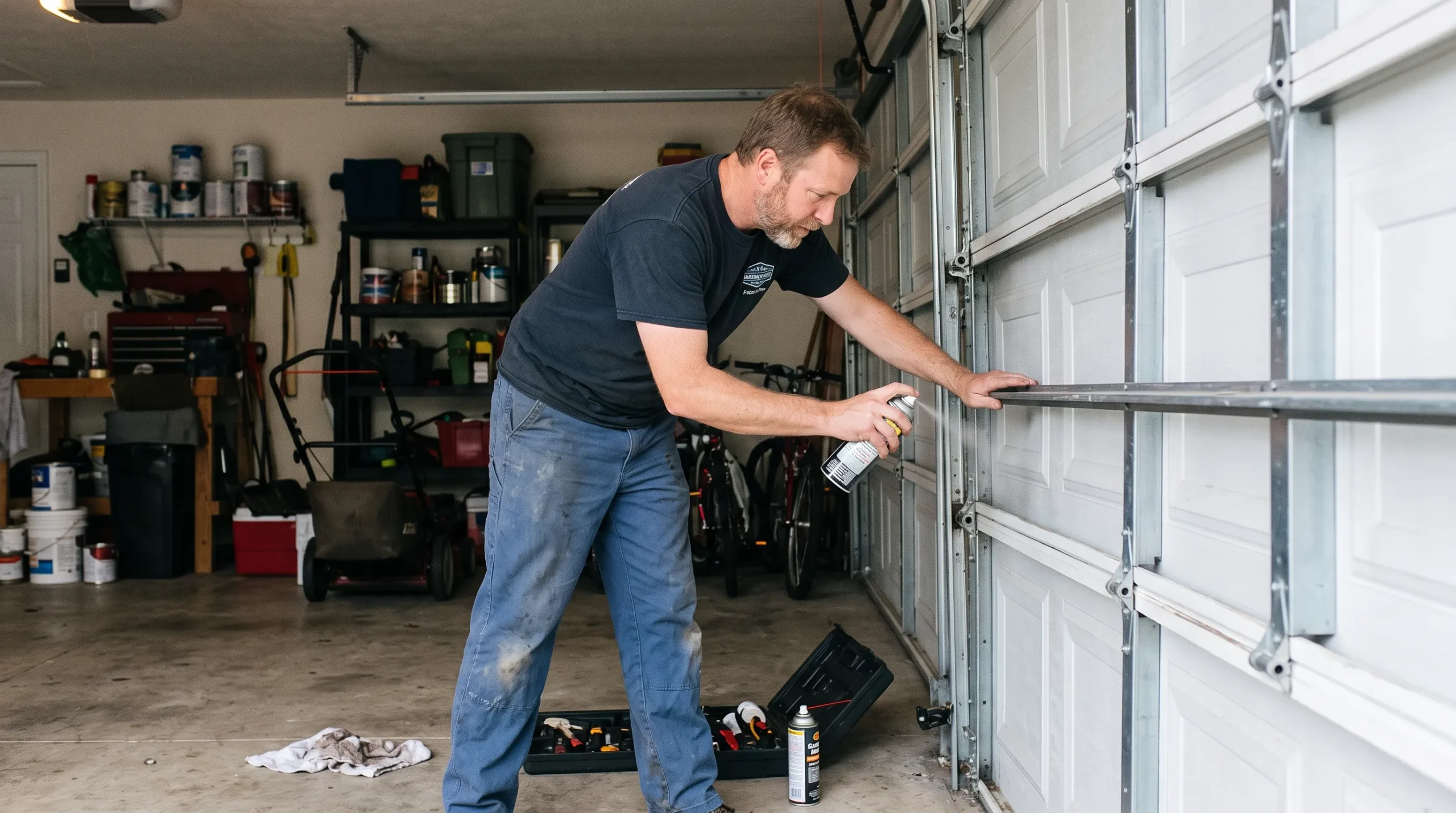
Tightening hardware, lubricating moving parts, and adjusting the tracks are worth trying first, since most of these fixes take less than an hour to complete with tools already on hand around the house. Working through them in this order resolves many cases without ever needing to schedule a service call.
Royale Garage Door Service has walked homeowners across Mission Viejo through each of these exact fixes whenever a shaking door turns out to be a simple, solvable problem rather than something more serious. Contact us or give us a call today, and our technicians will confirm exactly which fix applies before any work on the door begins.