A garage door typically shakes when closing because of worn rollers, loose hardware, a bent track, or spring tension that no longer matches the door’s weight. Identifying which one applies takes a close look at the door mid-cycle, since each cause produces a slightly different pattern of movement.
Routine garage door maintenance finds most of these problems while they are still minor and inexpensive to fix, especially during a routine technician visit. This guide walks through the exact signs, causes, and fixes behind a shaking garage door, along with the point where it becomes time to call a professional.
Key Takeaways
- Roller wear and lack of lubrication cause most minor uneven movement during closing
- Loose bolts and loose screws anywhere on the garage door system loosen the door’s motion over time
- Bent garage door tracks force the rollers to travel with uneven operation
- Torsion spring tension that has drifted off balance strains the opener motor
- Early fixes prevent most serious issues from developing into safety concerns
- Ongoing garage door shaking usually signals a repair a homeowner cannot finish alone
Signs a Garage Door Is Shaking When Closing
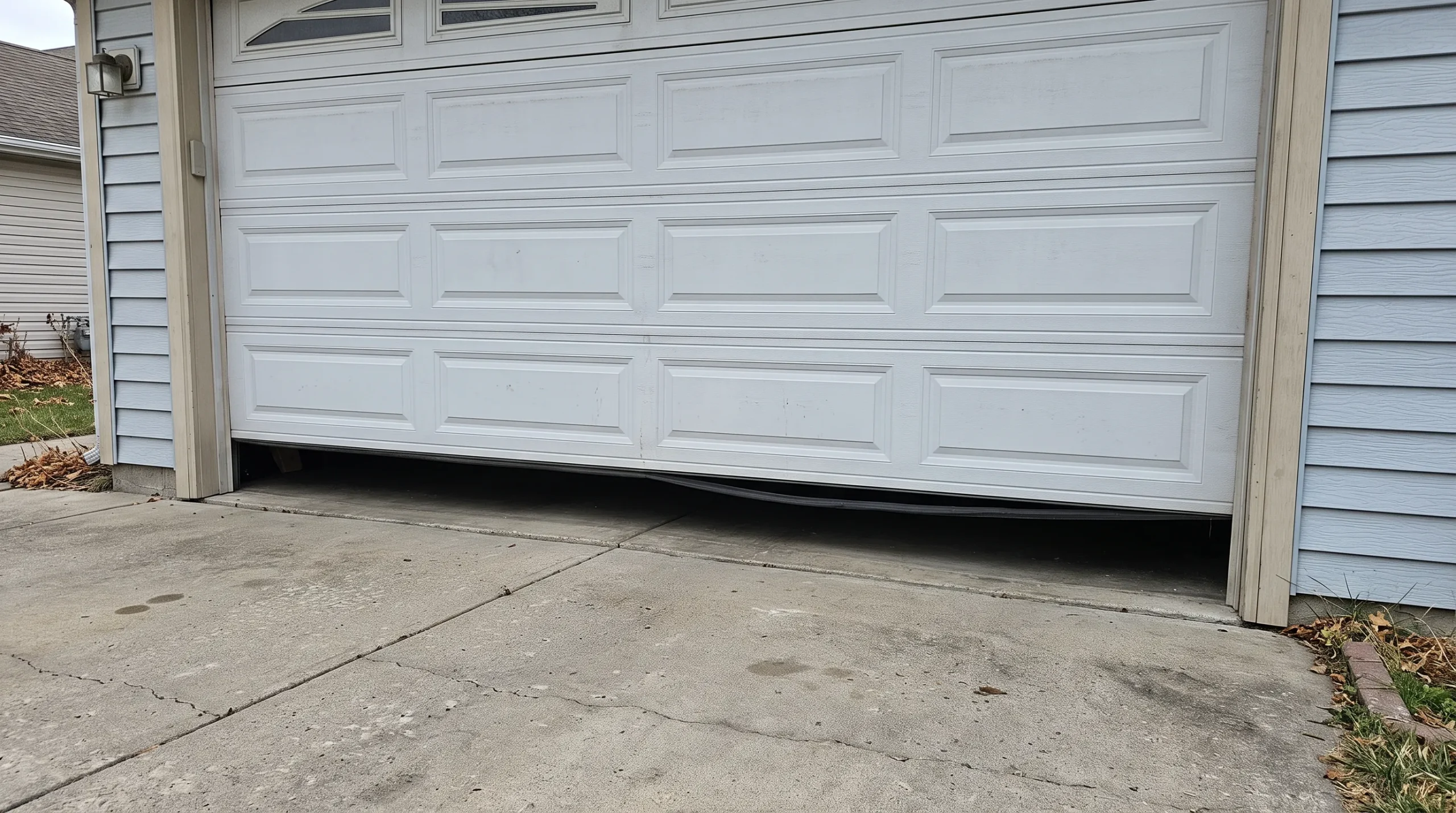
A shaking door rarely shows just one symptom, so a pattern across several signs helps identify how serious the track problem or hardware issue has become.
Homeowners tend to notice one of the following before anything else:
- A visible wobble in the door panels as the door nears the ground
- A jerky, uneven motion instead of one smooth operation from top to bottom
- Rattling or clunking near the garage door track at specific points in the cycle
- A door that closes unevenly, dropping faster on one side than the other
- Grinding or squeaking that grows louder with each cycle
Two or more of these signs together usually narrow down the likely cause well before any parts get inspected up close for a full diagnosis.
Common Causes of a Shaking Garage Door
A garage door shake traces back to one or more garage door components wearing down, loosening, or falling out of alignment over time.
Symptom or Cause | Safe for a Homeowner to Try | Needs a Professional |
Dirty track, light dust or debris | Yes, cleaning and light lubrication | No |
Loose visible bolts or screws | Yes, tightening with basic tools | No |
Worn or cracked rollers | Sometimes, for basic plastic rollers | Often, for full replacement |
Unbalanced or broken springs | No | Yes, always |
Frayed cables or worn pulleys | No | Yes, always |
Loose opener chain or belt | Sometimes, minor tension adjustment | Often, for gear or sprocket wear |
Working through each of these causes in order usually narrows the shaking down to one clear source well before a technician needs to step in.
Dry or Worn Rollers
Garage door rollers carry the full weight of the door along the track, and once they dry out or wear down, that motion stops being smooth.
A handful of specific issues tend to cause this wear:
- Lack of lubrication lets metal-on-metal contact wear down the roller surface faster
- Plastic rollers develop flat spots long before steel or nylon versions do
- Ball bearings inside the roller seize up once old grease hardens
- Rollers rated for a lighter door strain faster under a heavier one
- Temperature swings stiffen old lubricant, making the drag worse in cold weather
Worn rollers left unaddressed eventually drag hard enough to become a common cause of a garage door jerking at the same point in the cycle every time.
Dirty or Misaligned Tracks
A garage door track collects dirt, dents, and shifting brackets over years of use, and any one of those throws off how evenly the door travels.
Dirt and misalignment usually stem from a few recurring problems:
- Dirt and grit buildup make rollers catch instead of glide
- Small dents pinch the track’s width at that exact point
- Track brackets loosen and let the whole track shift slightly out of place
- Rust inside the channel roughens the surface rollers depend on
- Bent garage door tracks force rollers to fight the track’s shape on every cycle
A dirty or bent track often produces one of the more common causes of a garage door sticking at a single, repeatable spot rather than shaking evenly throughout the motion.
Loose Hardware and Hinges
Every cycle up and down puts stress on the bolts and hinges holding the garage door system together, and that stress adds up fast.
Several specific points tend to loosen first:
- Loose bolts at panel connection points let sections shift slightly against each other
- Loose screws on brackets and mounts back out gradually with vibration
- Hinge pivot points wear wider with age, adding play to the movement
- Enlarged hinge holes let panels flex more than they should
- Missing or stripped hardware left unreplaced compounds the looseness over time
Loose hardware like this produces an annoying jerky feeling that grows noticeably worse the longer it goes unaddressed.
Unbalanced or Weak Springs
Garage door springs carry most of the door’s weight, and once that spring tension drifts out of balance, the opener motor has to work against gravity instead of with it.
A spring imbalance usually comes down to one of these factors:
- A torsion spring naturally loses tension as it ages and cycles thousands of times
- One spring wearing faster than its matching pair throws off the balance
- Extension springs stretched beyond their rated cycle life stop holding tension evenly
- The wrong spring size installed originally never balances the door correctly
- Rust weakens spring coils well before the metal visibly shows damage
An unbalanced spring is a common reason behind a door that shakes hardest right before it fully closes, since that is where spring tension matters most.
Loose Opener Chain or Belt
Opener problems tied to a loose chain or belt show up as a jerky start-and-stop motion rather than one continuous pull.
The slack behind this issue tends to come from a few sources:
- A chain naturally stretches with age and repeated use
- A belt loosens gradually at the connection to the gear cog
- Improper tensioning during the original install leaves slack from day one
- Worn drive gear teeth create slack that grows with every cycle
- Sprocket wear changes how the chain sits, throwing off chain tension further
Chamberlain garage door openers and similar models usually need this tension checked and adjusted as part of any regular garage door opener repair visit.
Worn Pulleys or Frayed Cables
Cables and pulleys carry uneven load the moment either one starts to fail, and that imbalance shows up almost immediately during closing.
A few specific failure points explain most of these cases:
- Cables fray from years of repeated friction against the drum
- Pulley bearings seize up once old lubricant hardens inside
- Uneven wear on one side of the door creates lopsided resistance
- Rust forms on exposed cable strands long before a full snap happens
- Pulley misalignment puts sideways stress on the cable with every cycle
Worn cables or pulleys need the right tools and hands-on experience to replace safely, since they carry serious tension even when the door looks still.
What Homeowners Can Try Before Calling for Repair
A few fixes for a shaking garage door respond well to a homeowner’s own close look and basic tools, especially when the cause is simple wear rather than a broken part.
The most effective starting steps include:
- Cleaning dirt and debris out of the garage door track with a stiff brush
- Applying fresh lubricant to dry rollers, hinges, and the track surface
- Tightening any loose bolts or loose screws found along the panels and brackets
- Checking for an appropriate level of tightness on visible hardware without overtightening
- Testing the balance of the door by disconnecting the opener and lifting it halfway by hand
To walk through each of these specific steps in the full, correct order needed, read our guide on Easy Fixes for a Garage Door That Shakes When Closing, which covers the exact tools required to keep the process safe from start to finish.
Why It’s Best to Bring in a Professional for a Shaking Garage Door
A handful of causes behind a shaking door involve parts that store enough force to cause real injury, which is exactly where safety sensors and trained hands matter most.
A few specific risks make professional help the safer call:
- Garage door springs under tension can snap with enough force to cause serious harm
- Frayed cables carry the same risk once they let go under load
- A track problem severe enough to bend metal usually needs realignment tools a homeowner will not have
- Garage door opener problems tied to internal gears or wiring often require diagnostic equipment
- A door that keeps shaking after basic fixes usually points to a safety concern underneath
To understand exactly which symptoms mean it is time to stop troubleshooting and call in a professional, read our guide on When Does a Shaking Garage Door Need Professional Repair?, which breaks down the full range of warning signs in detail.
Simple Habits That Keep Shaking From Coming Back
Consistent care keeps most shake problems from returning once the initial cause gets fixed, since signs of wear almost always show up gradually.
A short seasonal routine covers most of what matters:
- Lubricating rollers, hinges, and the track every few months
- Checking spring tension and bolt tightness on a regular schedule
- Scheduling a professional garage door spring repair inspection once a year
- Watching for early flat spots or fraying on rollers and cables
- Keeping the track clean and free of dirt buildup between cleanings
To build a full, complete year-round maintenance routine around these exact habits, read our guide on How to Prevent a Garage Door From Shaking When Closing, which lays out a full seasonal checklist in detail.
Stopping the Shake Starts With Knowing the Cause

A door that shakes during closing is almost always signaling a specific, fixable problem, whether that means a dry roller, a loose bolt, or a spring that has finally worn out. Addressing the actual cause early keeps a minor annoyance from developing into a costly repair or a safety concern.
Royale Garage Door Service has helped homeowners across Mission Viejo track down exactly this kind of door jerk and get it resolved before it grows into a much larger and more costly repair. Contact us or give us a call today, and our trained technicians will take a close, careful look at the exact cause behind the shaking.