Choosing between wood and steel garage doors is one of the most common decisions homeowners in Mission Viejo, CA, face when planning a garage upgrade. Both materials have proven track records, but each brings a different set of qualities in terms of appearance, durability, and long-term value.
Custom wood doors offer a level of beauty and personalization that is difficult to match with any other material available on the market today. This guide breaks down the key differences between wood and steel so you can make a confident decision that works best for your home, lifestyle, and budget.
What Should You Know Before Choosing a Garage Door Material?
Every garage door material has its own set of strengths and trade-offs, and choosing the wrong one for your home can lead to higher maintenance costs, premature wear, and a look that simply does not match your neighborhood or lifestyle.
Several factors come into play before you settle on a material:
- The local climate in Mission Viejo directly influences how different materials perform and age over time
- HOA guidelines in many Mission Viejo neighborhoods may restrict which materials and styles are acceptable for your home’s exterior
- The weight of the door affects the performance of your garage door openers and the longevity of your hardware
- Different materials require different levels of maintenance, which impacts your time and long-term costs
- The wood species you choose is one of the first and most important decisions you will make when going with a wood door
To understand whether wood is the right investment for your home, read our guide on Are Wood Garage Doors Worth It in Mission Viejo?, which covers the key factors homeowners should weigh before making a final decision.

How Wood and Steel Garage Doors Compare
Wood and steel perform very differently across the factors that matter most to homeowners.
|
Factor |
Wood Garage Doors |
Steel Garage Doors |
|
Appearance |
Authentic wood grain and natural warmth |
Clean modern look with faux wood options |
|
Durability |
Vulnerable to moisture, UV, and impact |
Resistant to warping, but can dent and rust |
|
Maintenance |
Requires regular staining and repainting |
Low maintenance with occasional washing |
|
Insulation |
Natural thermal resistance with optional backing |
Higher R-values available with foam core options |
|
Weight |
Heavier and more demanding on hardware |
Lighter and easier on mechanical components |
|
Lifespan |
15 to 30 years with consistent upkeep |
20 to 30 years with minimal effort |
|
Cost |
Higher upfront and ongoing investment |
More affordable with lower maintenance costs |
|
Customization |
Fully customizable in size, style, and finish |
Limited customization compared to real wood |
The sections below break down each factor in detail to help you decide which material best fits your home.
Appearance and Curb Appeal
Wood garage doors deliver a warmth and authenticity that elevates a home’s exterior in ways that manufactured materials struggle to replicate.
Visual qualities that set wood apart from steel:
- Wood grain is unique per door, while steel relies on repeated embossed patterns
- Wood suits traditional architecture, while steel works better for contemporary homes
- Real wood ages gracefully, while faux steel finishes fade and peel over time
- Wood adds natural warmth, while steel delivers a cleaner and more uniform look
- Wood strengthens curb appeal in older neighborhoods, while steel fits modern developments
Garage doors account for nearly a third of a home’s facade, making them one of the most impactful home improvement investments a homeowner can make for curb appeal and resale value.
Durability and Weather Resistance
Steel has a clear advantage in impact resistance, but wood performs well in mild climates when given consistent attention.
Durability differences homeowners should weigh:
- Steel resists dents and cracks on impact, while wood chips and splits more easily
- Wood warps and rots with moisture exposure, while steel holds its form consistently
- Wood is treatable and refinishable, while steel requires coating replacement when damaged
- UV breaks down wood finishes faster, while steel coatings hold up longer under direct sunlight
- Steel rusts when its coating is compromised, while wood can be spot-treated more easily
Regular inspection of the door’s finish and seals is the most practical way to catch early weather damage before it becomes costly.
Insulation and Energy Efficiency
Energy efficiency plays a bigger role in garage door selection than many homeowners expect, especially when the garage shares a wall with a living space.
Insulation differences between wood and steel:
- Wood resists heat naturally, while bare steel conducts temperature more freely
- Steel foam cores achieve higher R-values than standard wood doors
- Insulated steel maintains stable temperatures while wood lets extremes pass through
- Wood insulation backing rarely matches purpose-built insulated steel performance
- Attached garages suffer most when garage door insulation is absent
An insulated garage door reduces heat transfer, lowers strain on your HVAC system, and keeps your garage at a more consistent temperature year-round.
Maintenance Requirements
Wood garage doors reward consistent upkeep, while steel offers a more forgiving schedule for homeowners with less time.
How maintenance demands differ between the two:
- Wood needs restaining every few years, while steel only needs occasional washing
- Wood edges must be sealed regularly, while steel only needs touch-ups on chips
- Neglected wood peels, warps, and rots, while neglected steel rusts and corrodes
- Wood refinishing is more involved, while steel repairs are simpler and less frequent
- Wood costs more time and money to maintain, while steel demands far less overall
Routine garage door maintenance makes the biggest difference in how long a wood door holds its appearance and structural integrity.
Weight and Structural Considerations
Wood garage doors are significantly heavier than steel, and that difference places real demands on the hardware and components that support them.
Structural factors that come with choosing wood:
- Wood strains torsion springs far more than a comparable steel door
- Wood requires higher-rated openers, while steel works with standard ones
- Wood wears tracks and rollers faster, while steel puts less demand on hardware
- Older frames may need reinforcement for wood, while steel installs more easily
- Steel’s lighter weight reduces overall stress on every component in the system
Confirming hardware compatibility before garage door installation is one of the most important steps in a successful wood door project.
Lifespan and Longevity
Both materials can deliver decades of performance, but the effort required to reach that lifespan differs considerably.
Longevity factors that separate wood from steel:
- Wood lasts 15 to 30 years, while steel lasts 20 to 30 years with less effort
- Skipped maintenance shortens wood’s life, while steel holds up with minimal care
- Wood breaks down faster without upkeep, while steel resists deterioration naturally
- Rot and warping threaten wood, while rust and denting limit steel over time
- Better wood species last longer, while steel performs consistently regardless of grade
Pairing the right material with your lifestyle and habits is the best way to get the most out of your garage door investment.
Pros and Cons of Wood and Steel Garage Doors
Weighing the advantages and disadvantages of each material gives homeowners a clearer picture of what they are committing to before making a final decision.
Wood Garage Doors
Wood garage doors offer a level of beauty and customization that makes them a top choice for homeowners who prioritize appearance and architectural character.
Pros
- Authentic wood grain and natural warmth, no other material fully replicates
- Fully customizable in size, style, finish, and hardware
- Adds significant curb appeal and boosts home resale value
- Performs well in mild climates like Mission Viejo with proper care
- Works beautifully with traditional, craftsman, and Mediterranean architecture
Cons
- Higher upfront cost compared to standard steel options
- Requires regular staining, sealing, and repainting to stay in good condition
- More vulnerable to moisture, warping, UV damage, and rot
- Heavier weight puts more demand on openers, springs, and hardware
Wood is the stronger choice for homeowners who value aesthetics and are committed to regular maintenance.
Steel Garage Doors
Steel garage doors are built for homeowners who want a dependable, low-effort option that holds up well under everyday conditions.
Pros
- Durable and resistant to daily wear, impact, and harsh conditions
- Low maintenance with simple periodic washing
- Insulated options deliver strong energy efficiency at a lower price point
- Lighter weight puts less strain on mechanical components
- More affordable upfront with lower long-term maintenance costs
Cons
- Prone to denting on impact and rusting when surface coating is compromised
- Faux wood finishes fade over time and lack the authenticity of real wood
- Limited customization compared to solid wood options
- Can feel less premium in neighborhoods where curb appeal is a priority
Steel is the practical option for homeowners who prioritize durability and low maintenance over aesthetics and customization.
What Wood Species Work Best for Garage Doors
Not every wood species holds up the same way outdoors, and choosing the wrong one can lead to premature deterioration and costly replacements.
Popular wood species used for garage doors:
- Western Red Cedar is lightweight, rot-resistant, and holds stains exceptionally well
- Mahogany is dense, richly colored, and highly resistant to warping and moisture
- Redwood is naturally durable with a vibrant tone, but it comes at a higher price point
- Accoya Wood is engineered for exceptional dimensional stability and long-term performance
- Reclaimed Wood is valued for its unique character, history, and material stability
To find out which species delivers the best performance for homes in the area, read our guide on Best Wood Types for Garage Doors in Mission Viejo, which covers everything homeowners need to consider before choosing a material.
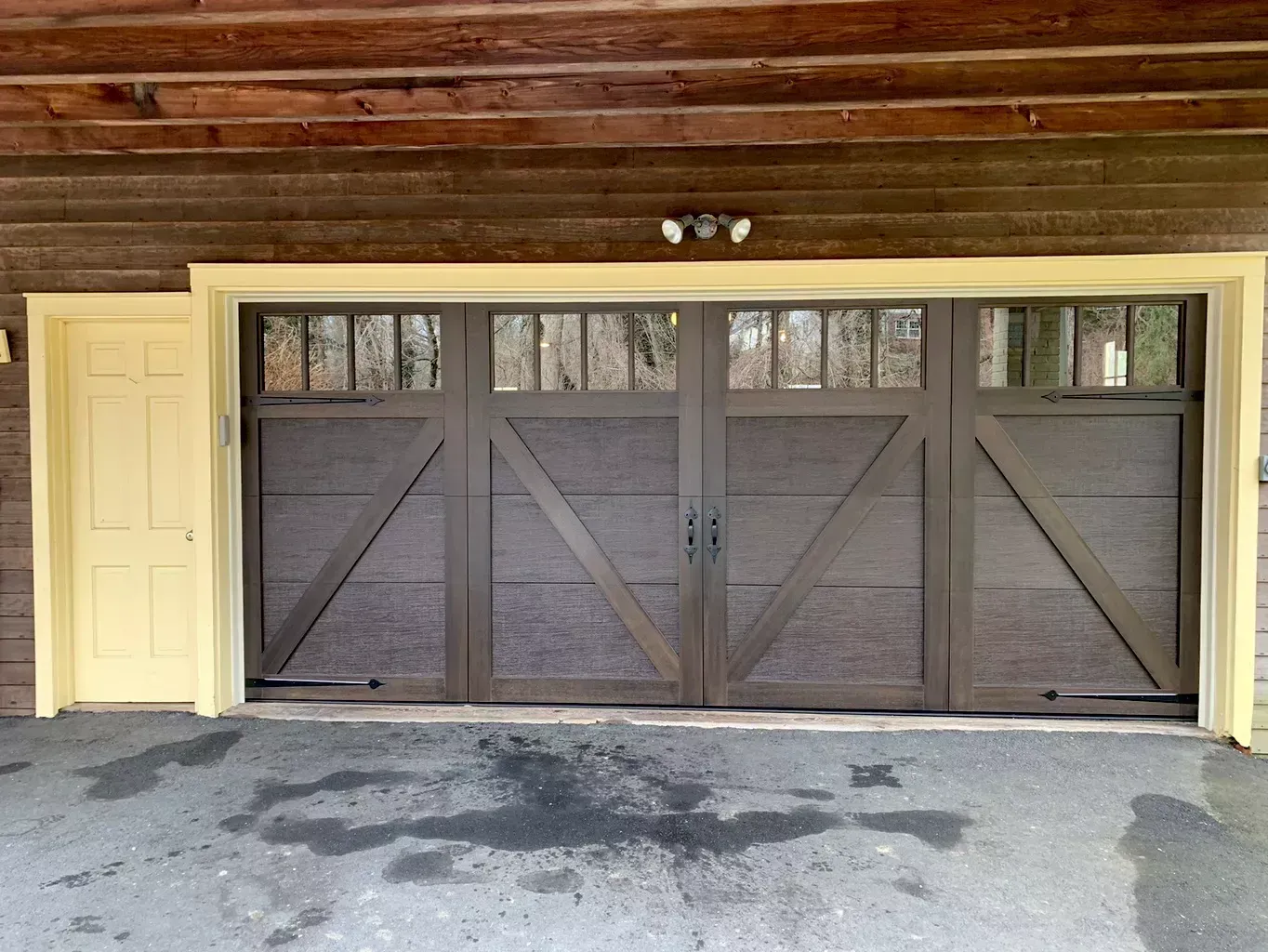
Style and Design Options for Wood Garage Doors
Wood offers more design flexibility than any other garage door material, making it easy to find a style that matches any home’s architecture.
Popular wood garage door styles to consider:
- Carriage house designs complement Craftsman and Spanish-style homes beautifully
- Modern vertical planks deliver clean lines for contemporary and mid-century architecture
- Reclaimed and rustic wood adds weathered character to farmhouse-style homes
- Diagonal cross designs create a bold visual element on any home exterior
- Tuscan-style doors offer custom Southern California aesthetics with decorative hardware
Wood overhead doors are available in enough styles and finishes to complement virtually any home exterior in Mission Viejo.
Common Wood Garage Door Problems and How to Prevent Them
Wood garage doors are built to last, but ignoring early warning signs can turn minor issues into expensive repairs.
Common problems wood garage door owners face:
- Warping and swelling develop when moisture penetrates unsealed wood edges
- Peeling finish and paint deteriorate faster under strong year-round sun exposure
- Rotting starts at the bottom corners, where moisture collects and lingers
- Cracking appears when wood repeatedly expands and contracts with temperature changes
- Fading stains result from prolonged UV exposure without a protective top coat
To learn how to keep these problems from shortening the life of your door, read our guide on Wood Garage Door Maintenance Tips for Mission Viejo Homes, which walks homeowners through the most practical care routines for long-term protection.
Choose the Right Garage Door Material for Your Mission Viejo Home
Wood and steel each bring real strengths to the table, and the best choice comes down to what matters most for your home, lifestyle, and budget. Every factor covered in this guide plays a role in determining which material delivers the most long-term value for your investment.
Royale Garage Door Service has experienced technicians ready to help Mission Viejo homeowners select, install, and maintain the perfect garage door for their home. Contact us or give us a call today, and we will walk you through every option, answer every question, and make sure your new garage door is everything you envisioned.