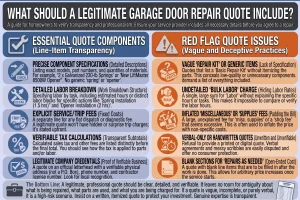
Legitimate garage door repair quotes list far more than a single total, covering everything from company details to the exact parts involved in the job. Missing any of these elements often signals a quote worth questioning before you approve it, especially once they ask for your signature.
Six distinct components separate a trustworthy quote from a rushed, incomplete estimate, no matter how small or large the repair. This guide breaks down each element, why it matters, and what to do if a quote leaves something important out before work begins.
Key Takeaways
- Include company details, including licensing and insurance, on every quote.
- A written diagnosis confirms the quote reflects the actual problem.
- List parts and labor separately, never combined.
- Warranty terms protect against paying twice for the same repair.
- A final total should include every fee, not just the base price.
What Makes a Garage Door Repair Quote Legitimate?
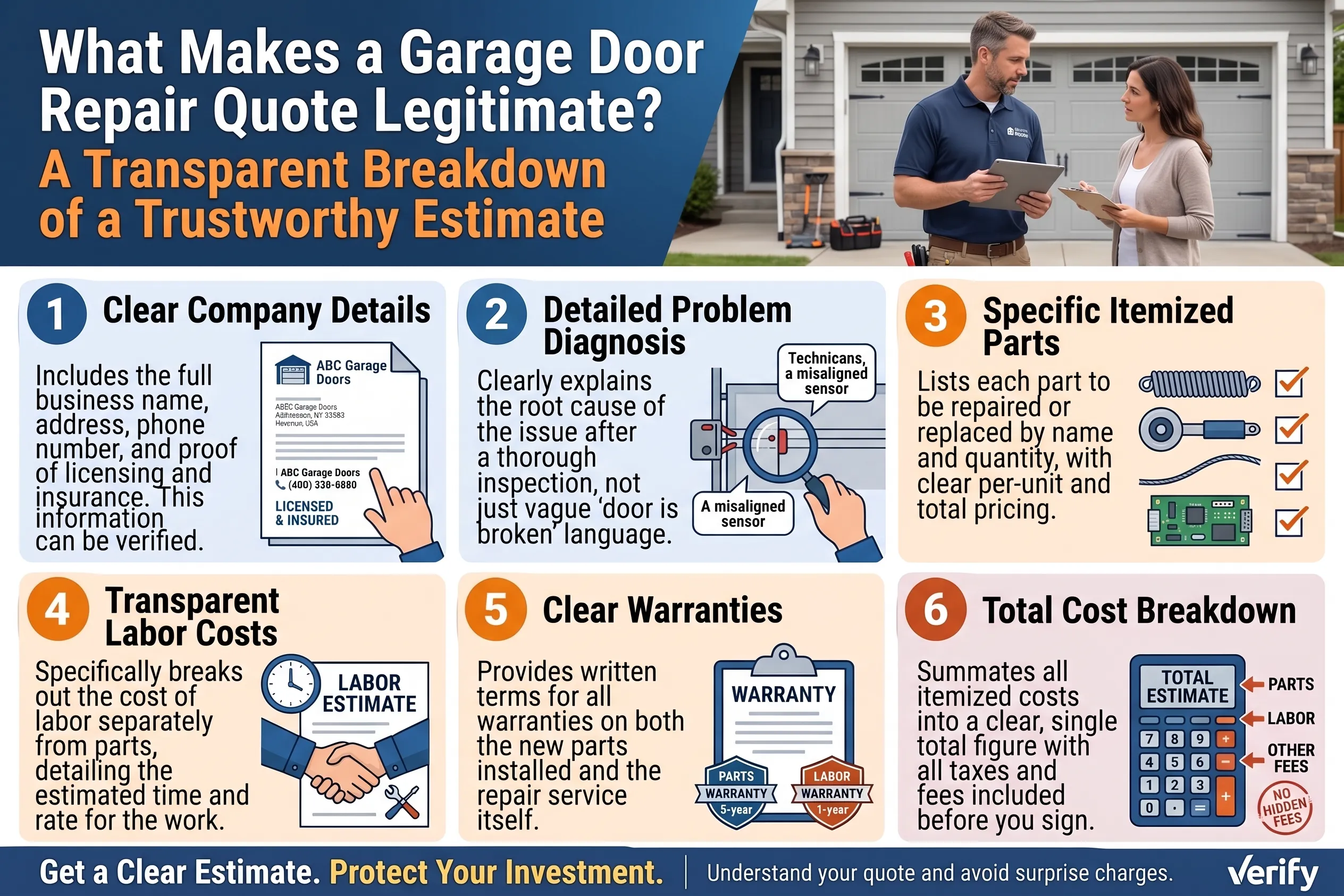
Expectations written down before any work begins protect both the homeowner and the company performing the repair equally.
Element | What It Confirms | Why It Matters |
Company Details | The business is verifiable and accountable | Confirms who to contact if a dispute arises |
Problem Diagnosis | The quote reflects the actual issue found | Prevents paying for a repair that misses the real cause |
Itemized Parts | Each component gets priced individually | Makes it possible to verify what the money paid for |
Labor Costs | Time and service fees are separated from parts | Clarifies exactly what the labor charge covers |
Warranties | Coverage terms for parts and labor are defined | Protects against paying twice for the same failure |
Total Cost | Every fee gets included in the final number | Removes the risk of a surprise charge at payment |
Paperwork that matches reality during the actual visit protects a homeowner far more than a friendly promise ever could.
Company Details
Legal business names, physical addresses, and license information belong on every legitimate quote, regardless of the total cost.
These details confirm a company operates transparently:
- The legal business name matching signage, vehicles, or paperwork.
- A physical address separate from a generic service area listing.
- A working phone number tied directly to the company.
- Current license and insurance information listed clearly.
- Contact details matching what appears on the company website.
Verifying these details before approving anything protects against working with an unaccountable operation that disappears once payment clears.
Problem Diagnosis
Confirming the exact issue found during inspection ties the quoted price to a real, verifiable cause instead of a general guess made from the driveway.
Clear diagnoses typically include these specific details:
- The exact part identified, such as a garage door opener or another component.
- A plain-language explanation of how the issue was confirmed.
- Notes distinguishing the primary issue from secondary concerns.
- Documentation supporting the diagnosis, like photos or measurements.
- Confirmation that testing, not assumption, led to the conclusion.
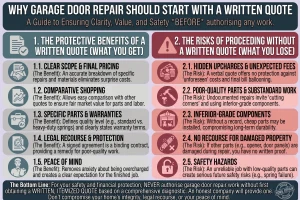
To understand why diagnosis and pricing connect so closely, read our guide on Why Should Garage Door Repair Start With a Written Quote?, which covers the reasoning behind requiring documentation upfront.
Itemized Parts
Verifying whether each component reflects a fair market cost starts with comparing pricing to comparable retail listings for the same part.
Proper itemization typically breaks down into these categories:
- List each individual part with its own specific price.
- Include brand or model information where relevant.
- No bundled “misc parts” charges hiding individual costs.
- Quantities specified clearly for parts requiring more than one.
- Pricing matching typical retail or wholesale cost ranges.
Itemized pricing gives homeowners a way to verify every dollar tied to the repair, long before the final invoice arrives.
Labor Costs
Charges tied to the technician’s time should always appear separate from parts pricing, no matter how small the job looks on paper at first glance.
Clear labor pricing typically includes these specific details:
- An hourly rate or flat fee, separate from parts like a garage door spring.
- The estimated time the repair should reasonably take.
- Any service call fee itemized apart from the labor charge.
- Clarity on whether labor pricing changes for emergency visits.
- No labor charge hidden in a single parts total.
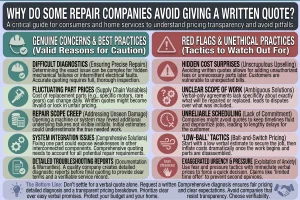
To trace why some companies leave labor pricing vague or bundled in the first place, read our guide on Why Do Some Repair Companies Avoid Giving a Written Quote?, which covers the specific motivations behind that avoidance.
Warranties
Reviewing manufacturer coverage expectations helps confirm whether the warranty terms offered on a quote actually protect the homeowner long-term.
Legitimate warranty terms typically specify these details:
- The exact duration of coverage for replaced parts.
- Separate warranty terms for labor versus parts.
- Conditions that would void the warranty if not followed.
- Whether the warranty transfers if the home changes ownership.
- Contact information for filing a warranty claim later.
Warranty terms written into the quote protect against paying twice for the same repair down the line, especially once the original technician is no longer easy to reach.
Total Cost
The final number on a quote should reflect every fee involved, not just the combined base cost of parts and labor.
Complete totals typically account for these specific items:
- Applicable taxes calculated into the final price.
- Any service call fee included in the overall total.
- A clear breakdown showing how the total was calculated.
- Space for a signature or approval before work begins.
- No hidden fees added after the total gets presented.
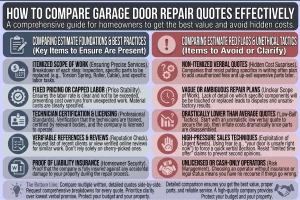
To walk through the specific method for comparing this total against other companies before choosing one, read our guide on How to Compare Garage Door Repair Quotes Effectively, which covers exactly what to check first.
What to Do If a Quote Is Missing Key Details?
Estimates involving garage door installation and other services both deserve the same scrutiny before approval, no matter how routine the job seems.
A few steps help when a quote leaves something out:
- Request the missing details in writing before approving anything.
- Ask directly why a specific element was left off the quote.
- Compare the incomplete quote against a second company’s documentation.
- Decline to sign until every element gets addressed clearly.
- Treat repeated omissions as a signal to look elsewhere entirely.
Filling these gaps before approval protects against surprises once the repair actually begins, especially once the technician is already partway through the job.
A Complete Quote Protects Every Garage Door Repair Decision
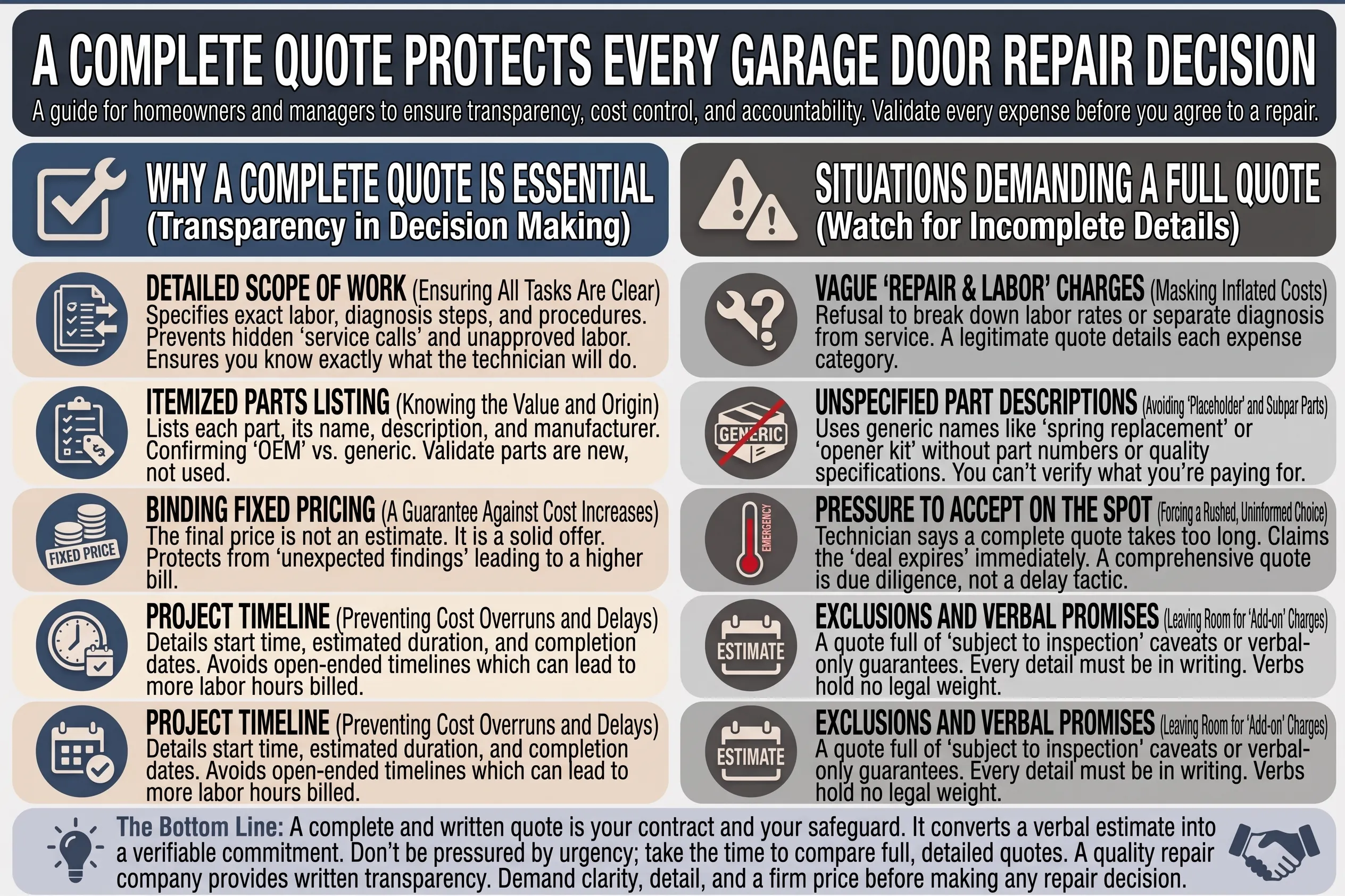
Documentation matters at every stage of a repair, protecting both the homeowner and the company from the first conversation through the final invoice. A quote missing any of these components deserves questions before you sign, no matter how minor the omission seems.
Royale Garage Door Service puts every one of these elements in writing for Mission Viejo homeowners before a technician ever picks up a tool. Contact us or give us a call today, and let our trained team put every detail in writing before asking for approval, so nothing is left to a verbal promise.