A garage door is made up of many working parts, and each one needs attention to keep the entire system functioning the way it should. Understanding what garage door maintenance includes gives homeowners a clear picture of what is actually being checked, adjusted, and serviced during every professional visit.
Maintenance goes beyond a quick look at the door panels, covering everything from the springs and cables to the sensors and weatherstripping. Every component in the system has a specific role to play, and a comprehensive maintenance routine ensures that none is overlooked during a professional visit.
Why Does Regular Garage Door Maintenance Matter?
A garage door that runs daily puts constant stress on its springs, cables, rollers, and hardware, and when that stress goes unmanaged, components start working against each other instead of functioning as a complete system.
Here is why regular garage door maintenance matters:
- Every moving part depends on surrounding components to function correctly
- Unmanaged stress puts excessive load on the garage door opener motor over time
- Minor wear across components compounds into a system-wide performance issue
- Scheduled maintenance keeps the entire system calibrated and coordinated
- Routine visits catch developing issues before they affect full capacity
To see how this directly affects your property’s worth, read our guide on How Garage Door Maintenance Services Impact Home Value, which breaks down the connection between routine care and long-term home value.
What Routine Garage Door Maintenance Actually Covers
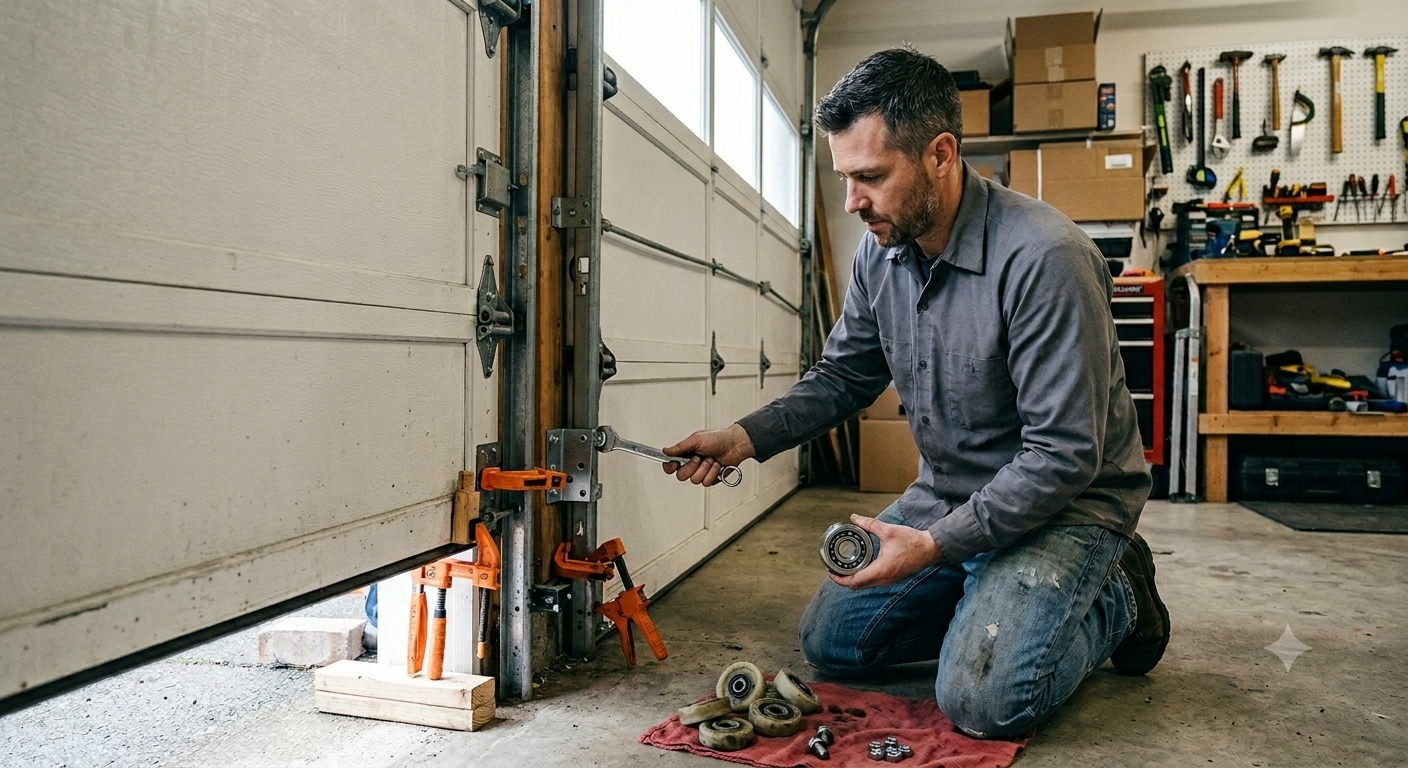
Hardware Inspection and Tightening
Daily vibrations from use gradually loosen bolts, nuts, and brackets until the hardware can no longer hold its position.
What gets checked during a hardware inspection:
- Bolts and nuts on tracks, hinges, and brackets are tightened with a wrench
- Bent or cracked brackets are flagged before they affect door movement
- Loose bolts on roller stems are secured to keep each roller seated properly
- Track hardware is checked on both sides for even tension across the full width
- Dents or deformations on metal components are noted for further evaluation
Neglected hardware is one of the most common triggers for a garage door repair that a routine tightening check could have prevented.
Garage Door Lubrication Services for Moving Parts
Without proper lubrication, metal components grind against each other and wear out well before their expected lifespan.
What garage door lubrication services cover:
- Rollers receive white lithium grease or silicone-based lubricant along the stem and bearing
- Hinges are lubricated at the pivot points where metal contacts metal
- Torsion springs get a thin coat of lubricant to reduce friction along the coil
- Old grease and debris are wiped away with a soft cloth before fresh lubricant is applied
- Tracks are left dry because the lubricant on them attracts dirt and causes buildup
Regular lubrication of moving parts maintains smooth operation and extends the working life of the entire system.
Door Balance Test
Even a slight imbalance forces the opener to compensate with extra effort on every single cycle.
Here is what the door balance test involves:
- The emergency release cord is pulled to disconnect the opener from the door
- The door is lifted to the halfway point and released to observe how it holds
- A door that drops or rises signals that spring tension needs adjustment
- Both sides are observed for uneven travel or resistance during manual operation
- The garage door spring condition is assessed if the door fails to hold its position
Keeping the door properly balanced protects the opener motor and ensures consistent, even movement on every cycle.
Garage Door Safety Check for Sensors and Auto-Reverse
Regular testing confirms that every safety feature responds accurately and consistently when the door is in motion, and something enters its path.
What a garage door safety check covers:
- Photo-eye sensors are wiped clean to remove dust, moisture, and lens buildup
- Sensor alignment is verified to maintain an unobstructed beam across the opening
- A solid object is placed in the door’s path to confirm auto-reverse activates on contact
- Indicator lights are checked to confirm that both sensors are receiving power correctly
- Sensors that fail the test are adjusted or replaced before the visit is completed
Accurate sensor function directly determines how the garage door system responds to any obstruction in its path during closing.
Cable and Spring Inspection
Even minor signs of wear on cables or torsion springs deserve immediate attention from a trained technician.
What gets evaluated during a cable and spring inspection:
- Cables are checked along their full length for fraying, kinking, or rust
- Torsion springs are inspected for gaps between coils that indicate lost tension
- The cable drum is examined to confirm even winding on both sides of the door
- Rust spots along the spring coil are noted as indicators of structural weakening
- Components showing irregular wear are flagged for professional service
Both spring tension and cable condition directly affect how the garage door system performs under load on every cycle.
Track Cleaning and Adjustment
Any buildup or misalignment along the track surface disrupts door movement and adds stress to the rollers and hinges.
What track cleaning and adjustment includes:
- Debris, hardened grease, and pests are cleared from the track channel
- Rust spots on the track surface are lightly addressed to restore smooth travel
- Vertical and horizontal alignment is checked on both sides for even travel
- Gaps between rollers and the track wall are measured and corrected where needed
- Loose track brackets are tightened to keep the track stable throughout every cycle
Proper track alignment is a fundamental part of preventive garage door maintenance, helping the door travel quietly and consistently.
Weatherstripping and Rubber Seal Check
A damaged or brittle seal leaves the garage exposed to moisture, pests, and summer heat that wear down everything inside.
What gets inspected during a weatherstripping check:
- The rubber seal is checked for cracks, gaps, or brittleness
- Side and top weatherstripping is inspected for separation or compression damage
- Door and frame contact points are checked to confirm the seal sits flush
- Sections that no longer form a complete barrier are marked for replacement
- Visibly deteriorated material is flagged for immediate replacement
Keeping weatherstripping in good condition prevents moisture and pest-related damage from developing inside the garage.
How Often Each Part of Garage Door Maintenance Should Be Done
Knowing how often to schedule each task is just as important as knowing what the task actually covers.
Here is a general garage door maintenance checklist broken down by frequency:
- Monthly: Test the auto-reverse feature, wipe down sensors, and listen for unusual sounds during operation
- Every 3 months: Lubricate moving parts, check the door balance, and inspect rollers and hinges for wear
- Annually: Schedule a full professional garage door inspection covering springs, cables, tracks, and weatherstripping
Sticking to a consistent schedule keeps every component in working condition and gives technicians a chance to catch minor issues before they require a service call.
Benefits of Routine Garage Door Maintenance
Regular upkeep delivers real, measurable value that goes well beyond keeping the door functional.
Here is what routine garage door maintenance does for your home:
- Regular maintenance extends system lifespan and reduces the need for replacements
- A well-maintained door operates quietly and consistently on every cycle
- Documented maintenance history adds credibility during a home sale or appraisal
- Well-kept doors strengthen curb appeal and home value in Mission Viejo, CA
- Consistent professional service gives homeowners peace of mind between visits
Routine maintenance is one of the most straightforward investments a homeowner can make to protect the entire garage door system.
The Risks of Skipping Garage Door Maintenance
Every skipped maintenance cycle leaves the system one step closer to a failure that a routine visit could have caught.
Here is what homeowners risk when garage door maintenance is skipped:
- Hardware that shifts out of position creates alignment issues that affect the entire door
- Unaddressed track problems cause the door to drag, stick, or come off course during operation
- Worn weatherstripping lets moisture and pests cause rust and internal damage
- Unchecked cables and springs can fail without any visible warning
- Neglected sensors and auto-reverse stop responding accurately over time
To learn about the specific problems that develop when maintenance is skipped, read our guide on Common Problems From Skipping Garage Door Maintenance, which breaks down how each issue develops and what it means for your garage door system.
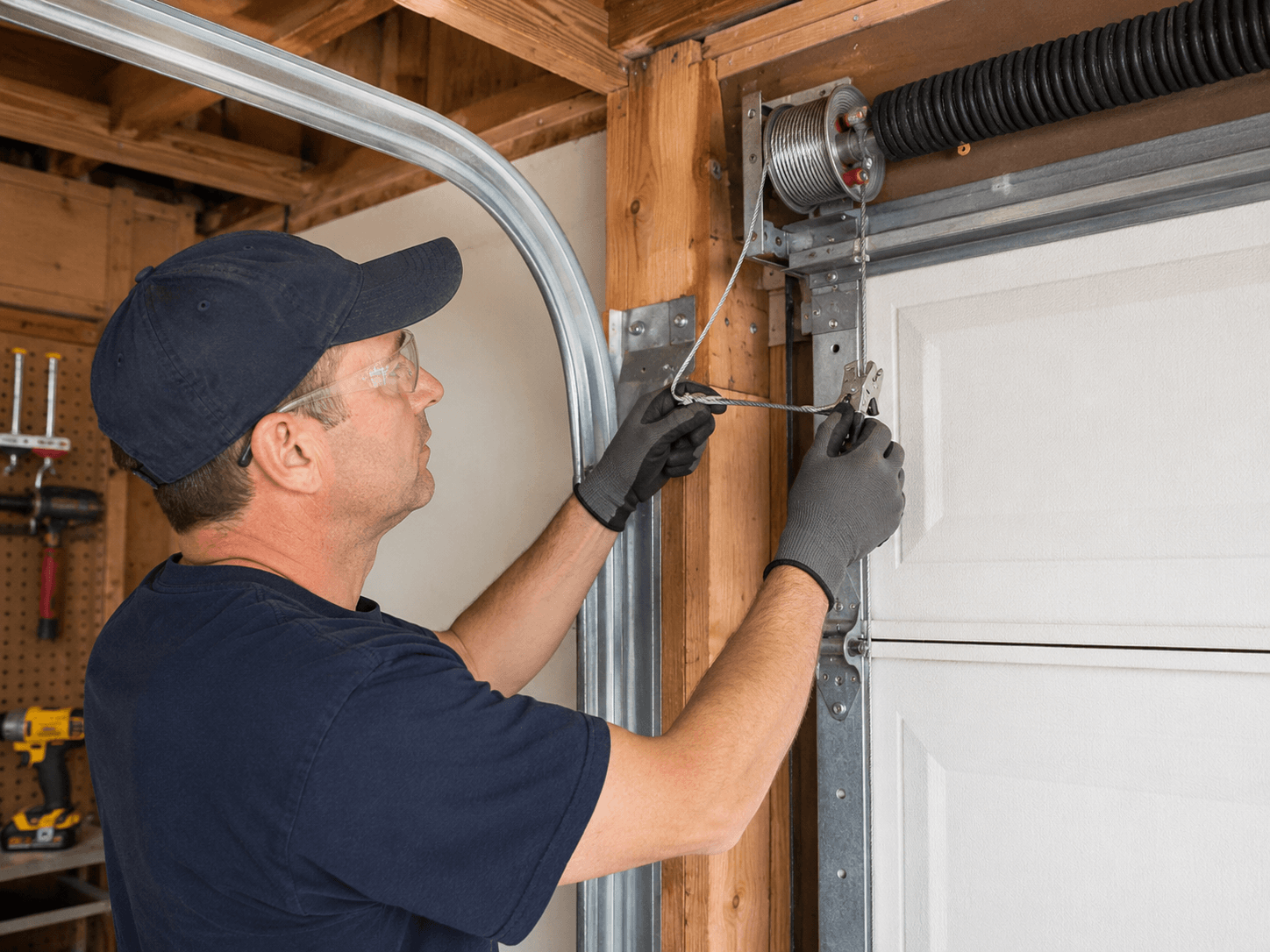
Who Handles Each Part of a Garage Door Maintenance Plan
Knowing which tasks belong to each category protects both the door and the homeowner throughout every maintenance cycle.
Tasks Homeowners Can Handle
Basic upkeep between professional visits goes a long way in keeping the garage door system in good working condition.
- Wipe down tracks with a dry cloth to remove dust and debris
- Apply lubricant to rollers, hinges, and springs when they sound dry
- Test the auto-reverse feature monthly using a block of wood
- Clean sensor lenses to keep them free from dust and moisture
- Check the door balance using the emergency release cord at the midpoint
Tasks That Require a Professional
High-tension components and precision adjustments require trained hands and the right tools to service correctly.
- Cable and spring tension evaluation requires a certified technician
- Full track realignment involves precise measurements affecting the entire system
- Sensor calibration and safety testing require professional equipment
- Opener motor and circuit board issues need technical expertise to resolve
- A complete garage door inspection covers every mechanical and safety component
To find out what a trained technician covers during a professional visit, read our guide on Why Hiring a Pro for Garage Door Maintenance Is Worth It, which explains what professional service includes and why it matters for your system’s long-term health.
Get Every Part of Your Garage Door Maintained the Right Way
Understanding what garage door maintenance entails gives every homeowner a clearer picture of how to keep the system running safely and efficiently during daily use. Knowing what gets inspected, adjusted, and serviced during every visit helps you make better decisions about the care your garage door actually needs.
Royale Garage Door Service takes pride in delivering thorough, professional garage door service that covers every component of your system from top to bottom. Contact us or give us a call today, and let our team make sure every part of your garage door gets the attention it deserves.