A garage door spring carries the full weight of the door every single time it opens and closes, and that constant stress is exactly what makes it one of the first parts to break down. The common reasons your garage door spring is broken stem from how the spring is used, how it is maintained, and how well it was installed from the start.
Identifying the cause of a broken garage door spring is not just about understanding what failed. It is about knowing what to watch for, what actions to take immediately after a failure, and how to make smarter decisions that keep the same problem from happening again down the road.

What Happens When a Garage Door Spring Breaks?
A garage door spring holds the entire system together through constant mechanical tension, and the moment it snaps, the door loses its counterbalance and every connected component feels the impact almost instantly.
Here is what happens when a garage door spring breaks:
- The door becomes too heavy for the opener motor to lift on its own
- A loud bang echoes through the garage as the coiled metal snaps under tension
- The door drops or refuses to move from the closed position
- Cables lose their guided tension and may loosen or detach from the drums
- The garage door opener strains against the full weight of the door and may shut off automatically
To understand what these failure signs look like up close and how to confirm a spring has broken, read our guide on How to Tell If Garage Door Spring Is Broken, which covers every physical indicator homeowners should check before doing anything else.
Why Your Garage Door Spring Is Broken — And What’s Really Behind It
Normal Wear and Tear Over Time
Every garage door spring has a rated cycle life, and daily use gradually pushes it closer to the point where the metal can no longer hold its tension.
Watch for these signs of age-related wear:
- Standard springs are rated for around 10,000 cycles before the metal begins to fatigue
- Opening and closing the door four times daily means reaching that limit in roughly 7 years
- Coils start losing their shape as the metal weakens toward the end of its cycle life
- Sudden failure becomes more likely once the spring passes its rated cycle count
- High-cycle spring upgrades extend the operational lifespan significantly
Knowing your spring’s cycle rating and installation date puts you in a much better position to plan ahead before failure occurs.
Rust and Corrosion
Moisture and metal are a difficult combination, and garage door springs face both on a daily basis in Mission Viejo, CA.
Here is how rust develops and damages springs over time:
- Humidity and coastal air accelerate oxidation on unprotected steel coils
- Rust increases friction between coils during every movement cycle
- Corroded coils lose flexibility and become brittle under repeated tension
- Visible orange or brown discoloration along the coils signals active corrosion
- Springs without lubrication develop rust significantly faster than those that are maintained
Proper lubrication, applied twice a year, is the most effective way to slow rust formation on your springs.
Incorrect Spring Size or Imbalance
Matching the spring to the door is not optional, and installing the wrong size puts the entire mechanism under stress it was never built to handle.
Pay attention to these imbalance-related issues:
- Springs must be selected based on the exact weight and height of the door
- An undersized spring wears out well ahead of schedule on every cycle
- Mismatched springs cause uneven movement that strains cables and drums simultaneously
- Doors that feel heavy on one side often have a spring that no longer matches the load
- Non-certified installations frequently result in incorrect spring sizing from the start
Only a trained technician for broken garage door spring repair can accurately measure door weight and select the correct size for proper operation.
Extreme Temperature Changes
Metal responds to temperature changes, and garage door springs endure that stress repeatedly with every seasonal change in Mission Viejo.
Notice how temperature affects spring integrity over time:
- Cold weather contracts the coils, adding tension to an already stressed spring
- Heat gradually reduces the spring’s calibration precision over time
- Repeated expansion and contraction weaken the internal coil structure
- North-facing and shaded doors experience more temperature-related stress
- Insulated doors reduce the temperature swings that strain springs year-round
Accounting for local climate conditions is important when choosing the right spring type and maintaining it properly year-round.
Lack of Maintenance
Garage door springs do not fail overnight, and neglect builds up gradually until the spring reaches a point where it simply cannot perform anymore.
Watch out for these maintenance gaps that speed up spring failure:
- Skipping lubrication lets friction build between coils on every cycle
- Unlubricated springs in coastal climates like Mission Viejo corrode significantly faster
- Ignoring unusual sounds delays action until the problem worsens
- Damaged cables and drums go unnoticed without regular inspections
- Early signs of wear go undetected when annual checkups are skipped
Scheduling professional garage door maintenance at least once a year keeps every component performing the way it was designed to.
Warning Signs Your Garage Door Spring Is About to Fail
Garage door springs rarely fail without sending signals first, and recognizing those signals early makes all the difference in how you respond.
Watch for these warning signs:
- A loud bang from the garage usually means a spring has already snapped under tension
- The door feels significantly heavier than usual when lifted manually
- Visible gaps or separations appear along the coils of a torsion spring
- The door opens unevenly or looks crooked during operation
- Unusual sounds, like grinding or squeaking, occur on every cycle
Acting on these warning signs before the spring fully fails gives you time to call a professional and avoid a complete breakdown.
Garage Door Spring Is Broken: Can You Still Open It?
When a garage door spring is broken, the door loses its counterbalance, and every attempt to open it puts immediate stress on the cables, motor, and tracks.
Here is what happens when you try to open a door with a broken spring:
- The opener motor strains against the full weight of the door and may shut off automatically
- Cables lose their guided tension and can detach from the drums without warning
- Manual lifting without spring support requires carrying the full dead weight of the door
- Forcing the door open can bend the tracks and shift the entire system out of alignment
- A door held open without spring support can drop suddenly if the cables give out
To get a full breakdown of your options after a spring failure, read our guide on Garage Door Spring Is Broken: Can You Still Open It?, which covers every scenario Mission Viejo homeowners need to know.
What to Do Next After Your Garage Door Spring Breaks
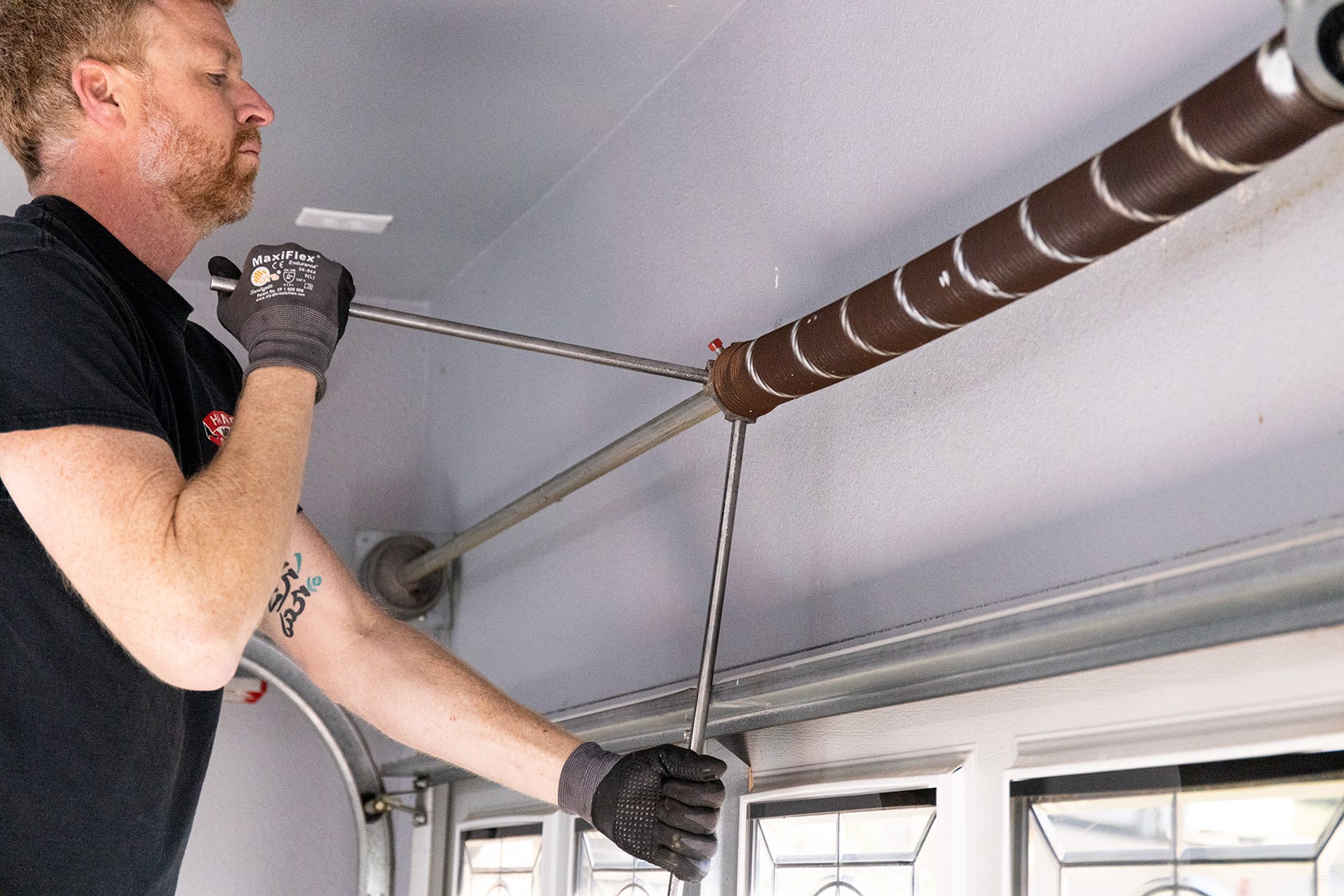
Knowing the right steps to take after your garage door spring breaks prevents additional damage to the cables, drums, and opener that are still holding the door in place.
Here is what to do immediately after a spring failure:
- Stop using the door entirely and disengage the automatic opener right away
- Visually inspect the cables and drums for fraying, looseness, or detachment
- Identify whether a torsion spring or an extension spring broke to help the technician prepare
- Check the bottom brackets and tracks for any bending or misalignment caused by the failure
- Contact a certified garage door technician as soon as possible for a full system inspection
To get a full picture of what professional spring repair involves and why it matters, read our guide on Garage Door Spring Is Broken? Hire a Pro in Mission Viejo, which explains what certified technicians look for and how they restore the system correctly.
How to Prevent Your Garage Door Spring From Breaking Again
Preventing another spring failure comes down to consistent habits that keep the spring, cables, and surrounding components in good working condition.
Here is how to protect your garage door spring from breaking again:
- Lubricate the spring coils with silicone spray at least twice a year
- Schedule a professional inspection annually to catch early signs of wear
- Test the door balance regularly by disconnecting the opener and lifting it manually
- Upgrade to high-cycle springs if your door sees heavy daily use
- Address unusual sounds or uneven movement before they develop into bigger problems
Proper care and regular maintenance are the most effective ways to extend the life of your garage door spring and keep the entire system running smoothly.
Know the Reasons, Act on Them, and Get Your Garage Door Spring Fixed Today
Every cause covered in this guide points to the same truth: garage door springs break when warning signs are missed and maintenance is delayed. Recognizing the common reasons your garage door spring is broken is the first step toward making informed decisions that protect your door and your home.
At Royale Garage Door Service, our certified technicians have handled every type of broken garage door spring repair across Mission Viejo and the surrounding areas. Contact us or give us a call today, and let our team inspect your garage door spring before a known issue turns into a much larger problem.