A garage door spring is broken, and the door won’t open, leaving most people wondering whether they can still open it and get on with their day. That question seems simple on the surface, but the answer involves real risks that every Mission Viejo homeowner needs to understand before touching the door.
Opening a garage door without a working spring puts the full weight of the door on your hands, your opener, and every component attached to the system. What looks like a quick fix can quickly turn into a dangerous situation that causes injury, damages other parts, and leads to a much bigger repair bill.

What Type of Garage Door Spring Do You Have?
The type of spring on your garage door determines how weight is distributed across the entire system, and it also decides how much strain is placed on the opener, the cables, and the tracks when that spring finally gives out.
|
What It Does |
Torsion Springs |
Extension Springs |
|
Mounting Location |
Above the door on a horizontal shaft |
Along the sides of the door on the tracks |
|
How They Work |
Store energy by twisting and coiling |
Store energy by stretching and contracting |
|
Number Used |
Usually one, sometimes two |
One on each side, typically two total |
|
Common In |
Modern garage doors |
Older garage doors |
|
When One Breaks |
Door loses almost all lifting support |
Door becomes uneven and tilts to one side |
|
Risk When Broken |
Extremely heavy door, full weight shifts to the opener |
Uneven tension, added stress on cables and tracks |
|
Repair Complexity |
Requires specialized winding tools and training |
Requires safety cables and proper tensioning |
|
Lifespan |
Higher cycle rating, longer lasting |
Lower cycle rating, wears out faster |
To understand exactly what happens to your door the moment that spring support disappears, read our guide on How to Tell If Garage Door Spring Is Broken, which explains how the entire system responds when the spring can no longer carry the load.
Common Reasons Your Garage Door Spring Breaks
A garage door spring does not break without reason, and knowing what pushes it to failure helps you catch the problem before it turns into a full breakdown.
Here are the most common causes:
- Normal wear and tear weakens the metal until it can no longer hold tension
- Rust and corrosion from moisture increase friction and accelerate spring failure
- Poor lubrication causes metal fatigue to build up with every open and close cycle
- Extreme temperature changes in Mission Viejo put repeated stress on the coils over time
- An improper spring size from a previous installation creates an uneven load from day one
To learn how these failure points affect the way your door behaves, read our guide on Common Reasons Your Garage Door Spring Is Broken, which breaks down each cause and what it means for the condition of your entire system.
What Happens to Your Garage Door When the Spring Breaks
When your garage door spring is broken, the effects spread across the entire system almost immediately.
Here is what happens:
- The door becomes extremely heavy with no spring to carry the load
- The garage door opener burns out trying to lift the full door weight on its own
- Cables lose tension and can snap or wrap around the drum under added stress
- Rollers, hinges, and tracks bend and fall out of alignment due to the uneven load
- The entire system becomes unstable and unsafe until a professional repair is completed
These effects do not remain confined to a single part of the door, and the longer the problem goes unaddressed, the more components are drawn into the damage.
How Do You Know If the Spring Is Really the Problem?
Not every garage door issue points to a broken spring, but there are specific signs that make it hard to miss.
Here is what to look for:
- A loud bang from the garage means a torsion spring has snapped under tension
- The opener stops after a few inches because it detected too much resistance from the door
- A visible gap in the spring coil confirms the spring has completely failed
- An uneven or crooked door points to a broken extension spring on one side
- An extremely heavy door, when lifted manually, means the spring is no longer carrying the load
These signs point directly to the spring as the source of the problem and mean the door needs professional attention before it is used again.
Can You Still Open a Garage Door with a Broken Spring?
While you can technically open a garage door with a broken spring, doing so is strongly discouraged because it puts you at risk of injury and can cause serious damage to the opener and other components of the system.
Listed below are the reasons why:
Extreme Weight Puts You at Serious Injury Risk
Lifting a garage door without a working spring means carrying the full weight of the door with no mechanical assistance whatsoever.
Watch out for these dangers:
- A standard residential door weighs between 100 and 300 pounds without spring support
- Losing grip mid-lift sends the door crashing down onto anything underneath
- Holding the door open while retrieving a vehicle carries the same risk as the initial lift
- Uneven lifting between two people can shift the door sideways off the tracks
- Carrying that kind of weight increases the risk of back and joint injuries
Attempting to lift a door without spring support exposes every person involved to a level of physical risk that no errand or emergency is worth.
Forcing the Door Open Can Destroy Your Garage Door Opener
Your garage door opener was built to assist a spring-loaded door, not carry the entire weight on its own.
Here is what forcing the door does to the opener:
- The motor overloads, trying to compensate for the missing spring support
- Internal gears strip under excessive force, requiring a full opener replacement
- The drive trolley and carriage can bend or detach while pulling a heavy door
- Repeated forced cycles accelerate wear on every moving part inside the opener unit
- The bracket connecting the opener arm to the door can tear away from the panel entirely
Putting that level of demand on a motor designed for assisted lifting pushes the opener well beyond what it was ever built to handle.
Snapped Cables and Damaged Components Are a Real Possibility
Every component connected to the spring system takes on extra load the moment the spring stops functioning.
Keep these risks in mind:
- Cables running along both sides of the door can snap when forced to carry a load without spring support
- A snapped cable can whip across the garage with enough force to damage walls and nearby objects
- Rollers can pop out of the tracks when the door moves without proper balance
- Hinges crack or bend when uneven pressure is applied across the door panels
- Drums can warp when cables wrap unevenly around them under the added tension
Operating a door without a working spring transfers load into components that were never designed to carry it independently.
Permanent Door Damage May Be Unavoidable
Forcing a door open without a working spring puts direct stress on the panels, frame, and structural sections of the door itself.
Here is how permanent damage develops:
- The top panel sections bear the most strain when the opener pulls without spring assistance
- Uneven pressure across the door sections causes cracking and warping over time
- A cracked or bent panel cannot be repaired and requires full replacement
- Damaged panels no longer seal properly against the weather and pests
- Severe stress can compromise the structural integrity of the entire door
Panel-level damage affects the door’s ability to operate, seal, and protect your garage long after the spring issue is resolved.
What to Do Instead of Forcing the Door Open
When your garage door spring is broken, the goal is to keep the situation from getting worse while you wait for professional help.
Here is what to do:
- Pull the red emergency release cord to disconnect the opener from the broken spring
- Leave the door in the closed position to keep your garage secured
- Check that the door is sitting flush with the ground without any gaps
- Inspect the cables on both sides to confirm they are still attached to the brackets
- Call a professional technician as soon as possible to assess the full damage
Taking these steps protects your door, your opener, and your property until a trained technician can properly handle the garage door repair.
If You Absolutely Must Open It — Emergency Steps Only
There are rare situations where opening the door cannot wait, and these steps are strictly for emergency use only.
Here is how to do it with the least amount of risk:
- Make sure at least one other strong adult is present before attempting anything
- Disconnect the opener completely by pulling the red emergency release cord
- Grip the bottom of the door firmly with both hands and lift slowly and evenly
- Place a sturdy prop immediately once the door is high enough to hold it open
- Move quickly, retrieve what you need, and lower the door back down as soon as possible
Even in an emergency, stopping and calling a professional is always the better option if the cables are visibly snapped or the door looks unstable.
Why a Broken Garage Door Spring Should Never Be a DIY Job
Broken garage door spring repair is not a job for untrained hands, and the risks go far beyond what most homeowners expect.
Here is why it should always be left to a professional:
- Springs store extreme tension that causes serious injury without the right tools
- One wrong move during installation can snap the spring immediately upon testing
- An incorrect spring size creates uneven stress across the door from day one
- Specialized winding bars and torque tools are the only way to control spring tension
- Every connected component pays the price for an improper spring fix
To find a trusted professional who can handle the job correctly, read our guide on Garage Door Spring Is Broken? Hire a Pro in Mission Viejo, which covers what to look for when choosing a garage door repair specialist in your area.
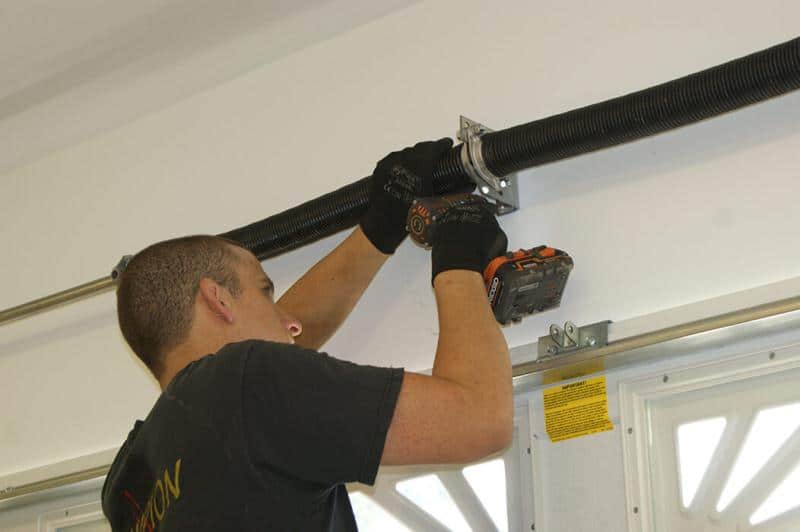
How a Garage Door Professional Handles a Broken Spring
A professional does not just swap out the broken spring and leave, as the entire system gets checked and restored to proper working condition.
Here is what a certified technician does:
- Inspects cables, drums, rollers, and the opener for any damage caused by the broken spring
- Measures the door’s height, width, and weight to select the correct replacement spring
- Installs the new spring using specialized winding bars to set the proper tension
- Test the door balance by releasing it at the halfway point to confirm it holds position
- Runs the opener through multiple cycles to verify the entire system is operating normally
Every step a professional takes is designed to restore the door to smooth operation and prevent the issue from recurring.
Stop Forcing the Door and Just Leave It to the Pros
Forcing open a garage door with a broken spring is never worth the injury, the damage to the opener, and the additional repairs that come with every attempt. Every section of this guide points to the same answer: leave the door closed and call a professional who knows exactly what to do.
Royale Garage Door Service has been helping homeowners in Mission Viejo, CA, get their garage doors back to full working condition with professional spring repair and complete system inspections. Contact us or give us a call today, and let our certified technicians assess your broken spring and get your garage door opening properly and safely again.