A garage door spring carries the full weight of the door every single time it moves, and when it breaks, the door becomes nearly impossible to lift on its own. Knowing how to tell if your garage door spring is broken is the first step toward avoiding further damage and getting the right help fast.
Most people do not realize their spring has failed until the door suddenly stops working, but the warning signs are usually there long before a complete breakdown happens. This guide covers every sign, cause, and action you need to know, including when to call for garage door spring repair and why waiting is never worth the risk.
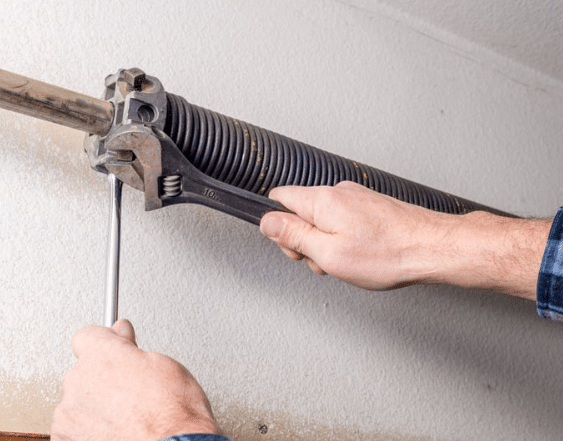
What Is a Garage Door Spring and Why Does It Matter?
A garage door spring is the core component that makes the entire system work, and without it, the door becomes a heavy, unbalanced load that puts strain on every other part connected to it.
Here is why your garage door spring matters:
- Springs carry the full weight of the door on every open and close cycle
- They allow the automatic opener to operate with minimal motor strain
- They keep the door balanced so it moves evenly from the open position to the closed position
- They protect the cables, rollers, and tracks from taking on more load than they are built for
- A failing spring puts the entire system at risk of sudden failure and costly repairs
To understand what happens the moment support disappears, read our guide on Garage Door Spring Is Broken: Can You Still Open It?, which explains exactly how the system responds when the spring can no longer support the load.
Common Reasons a Garage Door Spring Is Broken
Garage door springs do not break without reason, and knowing what pushes them to failure helps you catch the problem before it turns into a full breakdown.
Here are the most common reasons a garage door spring is broken:
- Normal wear and tear weakens the metal until it can no longer hold tension
- Rust and corrosion from moisture increase friction and accelerate spring failure
- Lack of lubrication causes small cracks to develop and grow with every cycle
- Extreme temperature changes in Mission Viejo put repeated stress on the coils
- An improper spring size from a previous installation creates an uneven load from day one
To learn how these failure points affect the way your door behaves day to day, read our guide on Common Reasons Your Garage Door Spring Is Broken, which breaks down each cause and what it means for the condition of your entire system.
Signs Your Broken Garage Door Spring Is Trying to Tell You Something
Visible Gap or Separation in the Spring
Checking the torsion spring above your door is one of the most direct ways to confirm your garage door spring is broken.
Watch for these indicators:
- A two to three-inch gap along the coil means the spring has fully snapped
- Both ends of the broken coil pull apart and stay separated regardless of door position
- Rust or discoloration near the gap points to corrosion as the root cause
- Extension springs show a similar break along their length on either side of the door
- The gap stays visible whether the door is open or closed
Visible separation on any spring type is a direct confirmation that the component has failed and requires professional attention.
Loud Bang Coming From the Garage
A sudden loud bang from inside the garage is one of the most alarming warning signs that a garage door spring is broken.
Listen and look for these signs after hearing the sound:
- The bang sounds similar to a firecracker going off near the ceiling of the garage
- After the sound, the door either refuses to open or only moves a few inches
- No visible falling object or intruder explains the noise
- Unusual sounds right before the bang signal that the spring was already under stress
- Operating the opener after the bang produces a straining motor sound with little door movement
Sudden spring failure releases enormous stored energy in a split second, which is why the sound carries through walls and into the rest of the house.
Door Is Extremely Heavy or Won’t Lift
Pulling the emergency release cord and attempting a manual lift are among the most reliable ways to confirm a broken garage door spring.
Pay attention to these physical signs:
- Lifting requires significantly more force than it ever has before
- Once lifted, the door drops back down immediately instead of staying up
- One side feels heavier than the other during the lift attempt
- The door moves a few inches and then stops as if something is holding it down
- Cables shift or loosen on the drum during repeated lifting attempts
Without spring support, the full weight of the door transfers directly to whoever is trying to lift it, and most people are not prepared for how heavy it actually is.
Door Falls Suddenly Instead of Moving Smoothly
Smooth and controlled movement from open to closed depends entirely on spring tension being present throughout the full travel of the door.
Look out for these movement problems:
- Door drops faster than normal instead of descending at a steady pace
- Slamming at the bottom of travel shakes the entire frame on impact
- Mid-travel drops happen without any input from the opener or remote
- Cables go slack and unspool from the drum during the drop
- Repeated sudden drops leave visible damage on the bottom seal and panels
Every uncontrolled drop puts stress on the tracks, rollers, and hinges that hold the door system together.
Crooked or Lopsided Door Operation
Uneven movement during opening or closing is a strong visual indicator that one spring has failed while the other is still partially functional.
Notice these visual and mechanical cues:
- One side of the door rises higher than the other during opening
- Visible gaps appear between the door and frame on one side when closed
- Jerking or jumping motion occurs while the opener tries to compensate for the imbalance
- Tracks on the heavier side show scoring from increased contact pressure
- Uneven movement gets worse with each cycle as the load shifts further
Operating a lopsided door accelerates wear on the cables, drums, and track hardware on the side carrying the extra load.
Slack or Dangling Cables on the Sides
Cables rely on spring tension to stay taut and properly seated on the drum, and once that tension disappears, the cables have nothing to pull against.
Identify cable problems by checking for these conditions:
- Cables hang loosely along the side of the door instead of running taut
- Coiled cable piled at the base means the drum has already unspooled
- Fraying or kinking along the cable points to stress from improper tension
- One cable appearing tighter than the other confirms that only one spring has failed
- Visible cable damage paired with an uneven door confirms multiple components need attention
Slack cables left unaddressed cause additional hardware to shift out of position the longer the door stays in use.
Opener Runs, but the Door Barely Moves
When the garage door opener strains against a door without spring support, the motor takes on a load it was never designed to handle alone.
Watch for these opener and door behaviors:
- Motor runs a full cycle and the door lifts only a few inches before stopping
- Clicking or grinding sounds come from the opener unit during the attempt
- The opener reverses immediately as the resistance sensor detects an abnormal load
- Repeated failed attempts cause the motor to overheat and shut down
- Manual operation after a failed attempt confirms the door is too heavy to move
Running the opener against a door without spring support puts the motor under a level of strain that shortens its working life with each failed attempt.
Can You Still Open Your Garage Door If the Spring Is Broken?
Yes, you can open a garage door with a broken spring, but every method of doing so comes with risks that can make the situation significantly worse.
Here are the risks of opening a garage door with a broken spring:
- The door becomes extremely heavy without spring support and can drop without warning
- Pulling the emergency release and lifting manually puts serious strain on your back and joints
- A door with slack or damaged cables can come off the tracks during the attempt
- Running the opener without spring support risks burning out the motor immediately
- Once open, the door will not stay up on its own and can fall on anyone underneath it
Attempting to open a garage door with a broken spring without understanding the risks puts both the door and anyone nearby in a vulnerable position.
What to Do Right Away After Spotting the Signs
Acting immediately upon noticing signs of a broken garage door spring prevents the situation from putting additional strain on the rest of the system.
Here is what to do right away after spotting the signs:
- Stop using the door and disconnect the opener to prevent accidental operation
- Do a visual check from a distance for gaps, slack cables, or an uneven door
- Avoid touching the spring, cables, or any connected hardware
- Note what you observed so you can describe the problem accurately when you call
- Contact a professional garage door technician in Mission Viejo for an inspection
Knowing what to do the moment you spot the signs keeps a manageable problem from escalating into a much larger garage door repair job.
Why Garage Door Spring Repair Should Be Left to the Pros
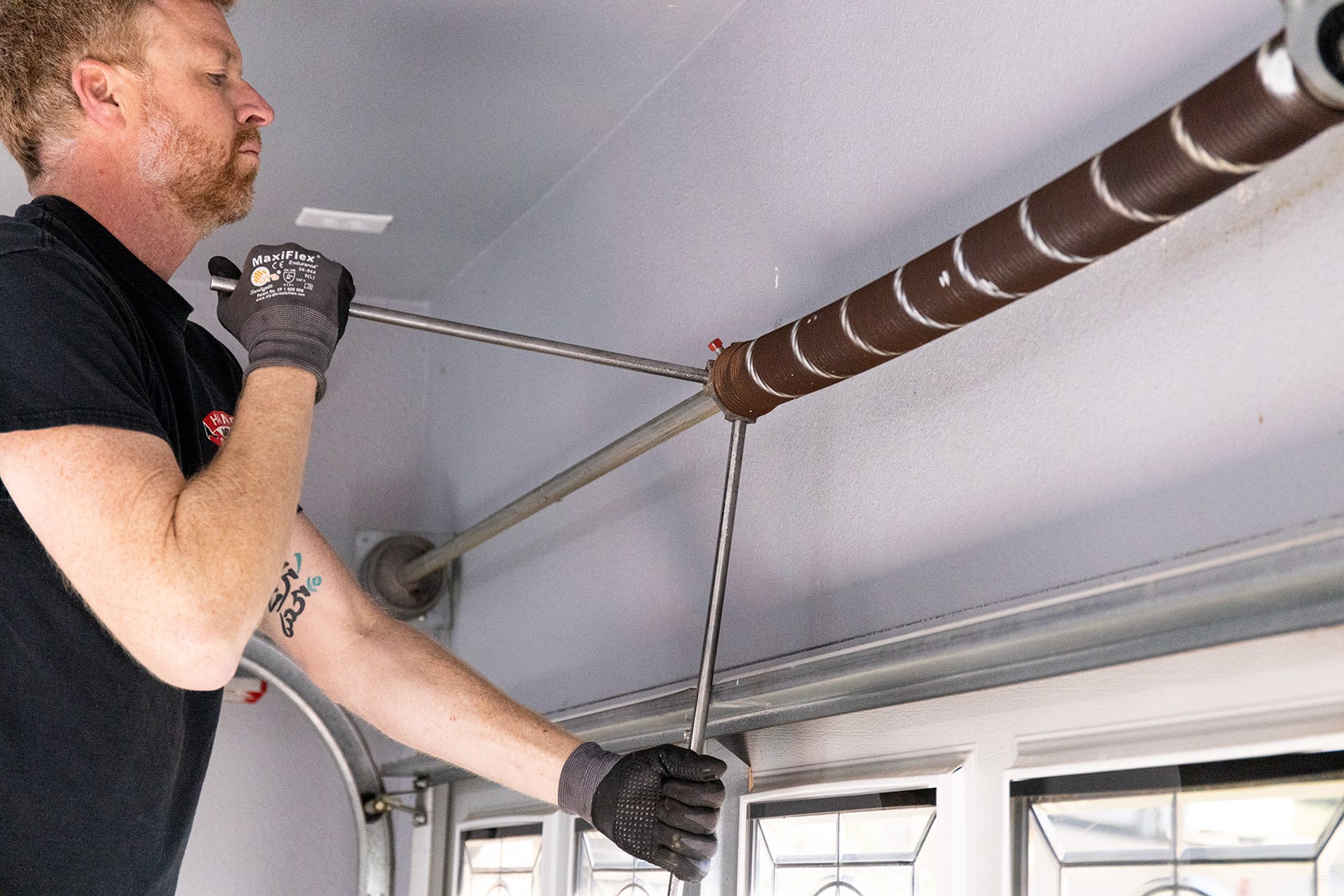
Broken garage door spring repair involves high-tension components that can cause serious injury when handled without the proper tools, training, and experience.
Here is why garage door spring repair should always be handled by a professional:
- Springs snap violently under extreme tension if wound or released incorrectly
- Specialized winding tools required for the job are not standard household equipment
- An incorrectly installed spring puts stress on every connected component
- Replacing one spring without assessing the other leads to another failure shortly after
- Certified technicians inspect the entire system to catch additional damage during repair
To find out what professional spring repair looks like and what to expect when you call, read our guide on Garage Door Spring Is Broken? Hire a Pro in Mission Viejo, which covers everything from choosing the right technician to what a proper repair involves.
How to Extend the Life of Your Garage Door Springs
Proper care and regular attention are what keep garage door springs performing reliably long before they ever show signs of failure.
Here is how to extend the life of your garage door springs:
- Lubricate the springs every three to four months using a lithium-based garage door lubricant
- Schedule a professional tune-up at least once a year to catch early signs of wear
- Test the door balance regularly by pulling the emergency release and lifting the door halfway
- Avoid forcing the door open or closed when it shows resistance or moves unevenly
- Replace aging springs proactively instead of waiting for a complete failure
Consistent maintenance and early action are what separate a garage door spring that lasts for years from one that fails without warning.
Telling If Your Garage Door Spring Is Broken Is the First Step Toward Getting It Fixed
Every sign covered in this guide gives you the knowledge to recognize a failing spring before it stops your door from working entirely. Acting on those signs early and calling the right people is what keeps a straightforward repair from becoming a much larger, more disruptive problem.
Royale Garage Door Service has been helping Mission Viejo homeowners resolve broken spring issues with professional repair work that gets the job done correctly the first time. Contact us or give us a call today and let our certified technicians inspect, diagnose, and replace your springs before the problem worsens.