A garage door that slips out of the track can start as a small scrape or shake and then turn into crooked travel or a door that will not close. Because the system is heavy and guided by tight spacing, even a small alignment change can create fast-moving garage door repair off-track issues that affect safety, access, and security.
Off-track trouble in Mission Viejo, CA, is often tied to worn guiding parts, shifting track hardware, or uneven lifting support that changes how the door travels. This list breaks down what “off track” really means, the most common causes behind it, the warning signs that show up early, and what a professional inspection checks to restore stable travel.
What Does “Off Track” Mean?
An off-track door is not always fully out of the rails. In many cases, the door still moves, but rollers are no longer centered inside the tracks, so the door drifts, rubs, or binds.
That partial drift can be misleading because the door may still open and close, yet it is already traveling outside normal guidance and accumulating additional wear with each cycle.
- Rollers not centered
- The door drifts to the side
- Door rubs or binds
- Travel feels rough
- The door moves unpredictably
- The door leans while moving
- The door shakes at one point
- Closing becomes uneven
- Opening feels strained
For fast clarity on warning signs that suggest garage door roller and track repair is needed now, read Do You Need Garage Door Roller and Track Repair Now?
Why Does It Happen?
Off-track trouble usually starts when resistance increases or lift becomes uneven. A track can drift slightly, a roller can wear down, a joint can develop a catch point, or one side can begin lifting differently than the other.
Off-track symptoms can also come from more than one issue at once. A worn roller can create shaking, shaking can loosen hardware, loose hardware can change track spacing, and changed spacing can create more binding. That chain reaction is why garage door repair off-track issues tend to escalate instead of staying the same.
- Resistance increases friction
- The lift becomes uneven
- Tracks drift from vibration
- Joints form catch points
- Rollers ride track edge
- Side pressure keeps rising
- Door twists under load
- Wear spreads across parts
- Symptoms stack over time
For timing guidance and when service is the safest next step, read When Should You Call Garage Door Off-Track Services?.
What Triggers Garage Door Off-Track Repair Most?
Most off-track problems come from guiding wear, shifting rails, or uneven lift, which change how the door moves. Some issues start with a bump near the track zone, while others build slowly through daily cycles and vibration.
Once friction rises, the door may begin riding close to the track edge. That edge pressure increases drift, increases binding, and increases the chance of a slip-out, especially when the door travels through curved track sections.
- Track area impact events
- Loose brackets and drift
- Worn rollers and wobble
- Bent or warped rails
- Track joint catch points
- Uneven cable lift support
- Side pull from tension
- Spring balance changes
- Hinge and section shift
- Debris blocking roller path
- Residue raises friction levels
- Opener pushing through drag
- Continued cycling after warnings
- Door twists under load
- Track spacing pinch points
- Repeating resistance patterns
- Hardware loosening from vibration
How Impacts Start Off-Track Trouble
A garage door does not need a major collision to begin drifting. A small contact near the track area can shift a bracket, tweak the rail spacing, or create a slight bend that becomes a repeat resistance point.
Even a small change can create the same rub spot every cycle. Over time, that rub spot can push the rollers closer to the edge, increasing the risk of a slip-out.
- Bikes bumping the track area
- Trash bins near rails
- Storage shifting into track
- Vehicle contact with brackets
- Ladders are hitting the rail zone
- Tools striking track sections
- Boxes leaning on tracks
- Sports gear near rails
Why Loose Hardware Is a Frequent Trigger
Tracks rely on brackets that anchor the rails to the wall. Over time, vibration can loosen fasteners, especially when the door already has rough travel.
Garage door installation details can influence how often this happens over time. If rail spacing, bracket anchoring, or track positioning is even slightly off, vibration has an easier path to turn small movement into track drift and pinch points.
When rails drift, spacing changes. Even small spacing changes can create pinch points that force rollers to rub and bind, and binding makes the door travel more crooked.
- Brackets loosen over time
- Rails drift out of line
- Spacing creates pinch points
- Rollers rub track walls
- The door begins pulling sideways
- Vibration increases even more
- Fasteners lose their tight hold
- Rails shift after shaking
Why Worn Rollers Are a Common Root Cause
Rollers are small parts that guide a very heavy door. When rollers wear down, they can develop wobble and rough travel that shows up as shaking, squealing, or chatter.
Wobble makes it easier for the roller to climb toward the track lip under load, and rough travel increases friction that pulls the door toward one side.
- Rollers wobble under load
- Rough travel creates chatter
- Edge pressure keeps increasing
- Rollers drift toward the lip
- Guidance becomes unstable
- Slip-out risk rises fast
- Squeals start, then grow
- Shaking spreads tothe hinges
How Track Shape Changes Create Repeat Resistance
Tracks can bend, warp, or twist from minor impact, bracket shift, or long-term wear. A track that is slightly out of line can still work, but it forces the door to fight the path.
That fight often shows up as repeated hesitation, scraping, or a jolt at the same spot. A repeat jolt is usually the track telling you there is a catch point.
- Track bends create rubbing
- Warps cause repeat jolts
- Curves become misleading
- Joints develop small lips
- Rough spots form grooves
- Resistance repeats every cycle
- Track walls wear unevenly
- Rollers catch at joints
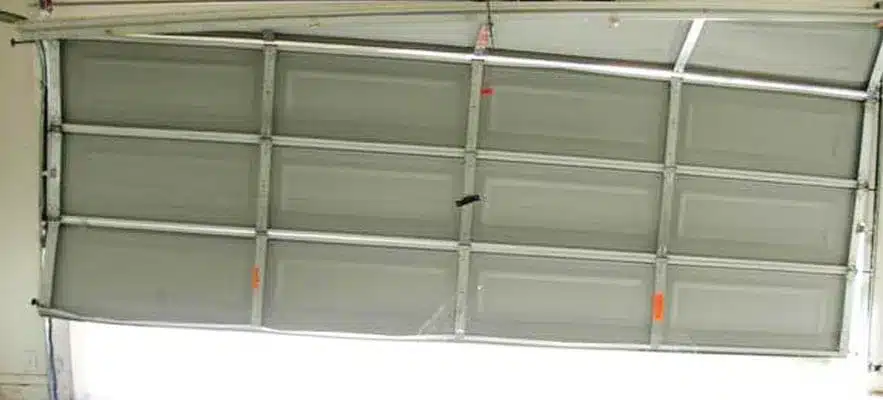
Why Cables and Balance Matter in Off-Track Issues
Many homeowners focus only on the track area, but off-track trouble often involves uneven lift. If one side lifts differently, the door tilts and overloads one track wall.
Balance problems can also make the door heavier. A heavier door increases strain on the guiding system and makes rollers more likely to ride the edge.
- Uneven lift causes tilt
- Tilt overloads one track
- Side pressure increases friction
- Heavy door strains guidance
- Drift becomes more likely
- Repeat slip-out risk rises
- Uneven closing becomes common
- The door feels heavier today
Early Warning Signs Homeowners Notice First
Warning signs often appear before a door fully slips out. Noise changes are common early clues, such as scraping, grinding, or sharp squeals.
Visual changes often follow, including a door that looks slightly crooked, uneven side gaps, or rubbing near the jamb. Control changes can show up too, like stopping mid-travel or reversing more than once. These control changes often appear as garage door opener strain, repeated reversal, or delayed response when resistance rises.
A helpful way to think about warning signs is to group them into three buckets: sound, sight, and control. When you notice more than one bucket at the same time, the issue is usually beyond normal wear.
- Scraping sounds during travel
- Grinding metal-on-metal noise
- Sharp squeals under load
- Shaking or vibration movement
- Repeat the jolt same spot
- The door looks slightly crooked
- Uneven side gaps appear
- Rubbing near the jamb area
- Stops mid-travel suddenly
- Reverses more than once
- The door feels heavier today
- Travel is slower than normal
- Opener sounds strained
- Closing becomes inconsistent
If you are debating whether adjustment is safe at this stage, readIs Garage Door Off-Track Adjustment Safe or Risky? before taking the next step.
Why Off-Track Problems Escalate Quickly
Off-track trouble worsens fast because friction builds with every cycle. When rollers are not centered, they rub and bind, which strains multiple moving parts and makes the track path rougher over time.
Uneven lift can speed this up even more by twisting the door and pushing the rollers closer to the track edge. Once vibration begins, it often loosens hardware faster, and that changes spacing, which increases binding.
- Resistance multiplies wear fast
- Friction strains moving parts
- Uneven load twists the door
- Minor tilt becomes a jam
- Vibration loosens hardware faster
- Opener increases edge pressure
- Track walls wear unevenly
- Rollers ride closer to the lip
- Catch points grow quickly
What We Check During Garage Door Off-Track Services
Garage door off-track services focus on restoring centered travel and confirming that the real cause is corrected. We check guidance, lift symmetry, and balance together because off-track symptoms often have more than one driver.
If the door is re-centered without correcting the true driver, the same drift pattern can return. A complete check reduces repeat problems by confirming the door is stable through the full travel path.
- Door position in opening
- Track spacing and alignment
- Bracket stability and anchoring
- Roller wear and tracking
- Catch points and joints
- Cable tracking and symmetry
- Drum alignment check
- Spring balance evaluation
- Opener reaction patterns
- Repeat jolt locations
- Drift direction patterns
- Rough travel zones
When Roller and Track Repair Is the Real Root Cause
Some off-track trouble keeps returning because the guiding surfaces are worn. Rough rollers can wear the track, and worn track surfaces can guide rollers poorly, which increases drift and repeat catch points.
When the door keeps pulling toward the same side, garage door roller and track repair may be the most practical way to restore stable guidance and reduce repeat slip-outs.
- Rollers and tracks wear together
- Repeat drift toward one side
- Worn tracks create catch points
- Roller wobble increases drift
- Guidance strain spreads outward
- Resistance keeps returning
- Edge pressure stays high
Ready to Get Your Door Moving Smoothly Again?
Garage door off-track trouble is usually caused by resistance and uneven load that pushes rollers toward the track edge. Common triggers include worn rollers, drifting track hardware, track shape changes, cable tension issues, and balance issues that cause the door to travel crookedly.
Royale Garage Door Service supports Mission Viejo, CA, homeowners with garage door repair, overhead doors, garage door openers, garage door spring service, garage door installation, and garage door remotes. If your door is scraping, tilted, or reversing unexpectedly, stop using it, keep the area clear, and contact us or give us a call to schedule an inspection and restore stable, centered travel.